
I have been very interested in volcanoes, and when my friend Martha told me that she lives near the world’s smalled inactive volcano, and that we could climb inside, I said, “Yes, I want to do that !!!” So during my stay with her in May, we went there.

The name Cuexcomate comes from the Nahuatl word Cuexcomatl which means “crock pot” or “place to keep” (because those who discovered it would use it to store seeds.). It was part of a geyser that was formed in 1064 as the result of a massive eruption of the volcano Popocatépetl and it is located in the neighborhood of La Libertad in the city of Puebla. It is formed from hydrogen sulfide water and lava.

The dimensions are:
Diameter of the crater – 8 meters (26.25 feet)
Height above ground – 13 meters (42.65 feet)
Total height from crater to inside base – 23 meters (75.46 feet)
Diameter of the base – 23 meters (75.46 feet)
Approximate weight – 400 tons
There is a small natural waterfall and a stream inside.
When we arrived, I wasn’t sure what to expect, and it certainly didn’t look like my idea of a volcano. It was more like a pile of cement from the outside. After paying our entrance fee, we climbed up a metal staircase to the top of the caldera. Looking down into the caldera was a staircase in a tight spiral. During the descent, I realized that it was much deeper than it appeared to be from the outside.
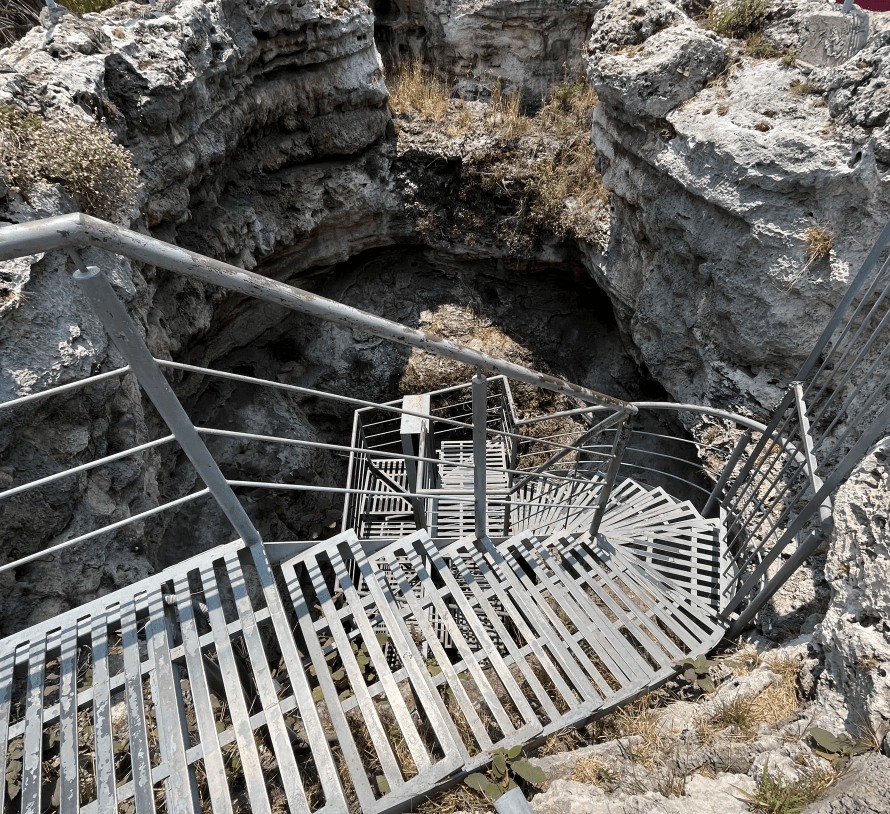
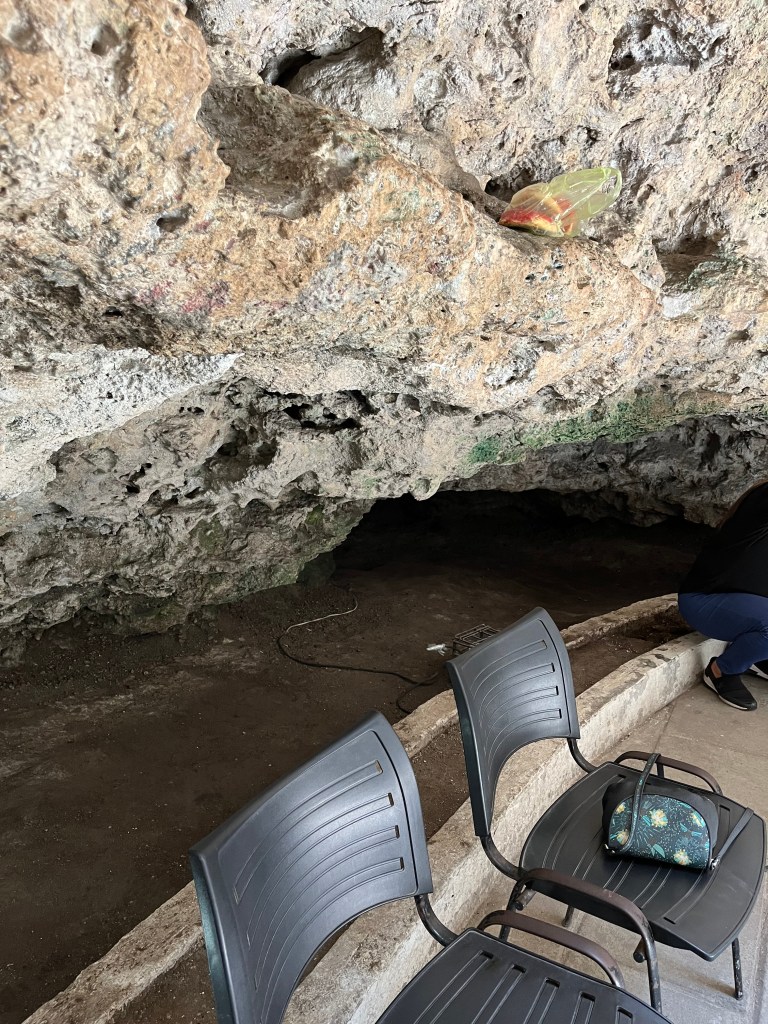
It was a very hot, dry and sunny day, but once inside it was cool with a little bit of humidity. Water was trickling down some rocks and there was a stream flowing under some rocks at the base. The base itself was paved over and chairs were situated where you could sit and relax while contemplating the fact that you were sitting inside a volcano that had formed almost a thousand years ago.

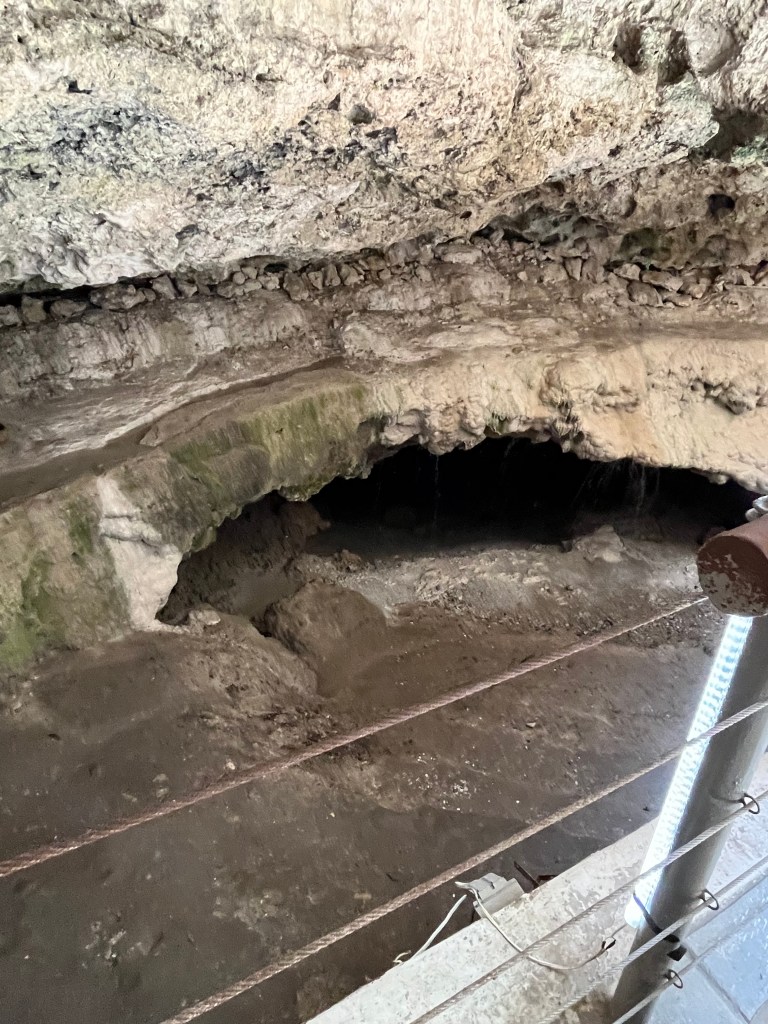
stream at the base of the volcano
++++++++++++++++++++++++++++++++++++++++++++++++++++++++++++++++
Martha posing at the base of the volcano

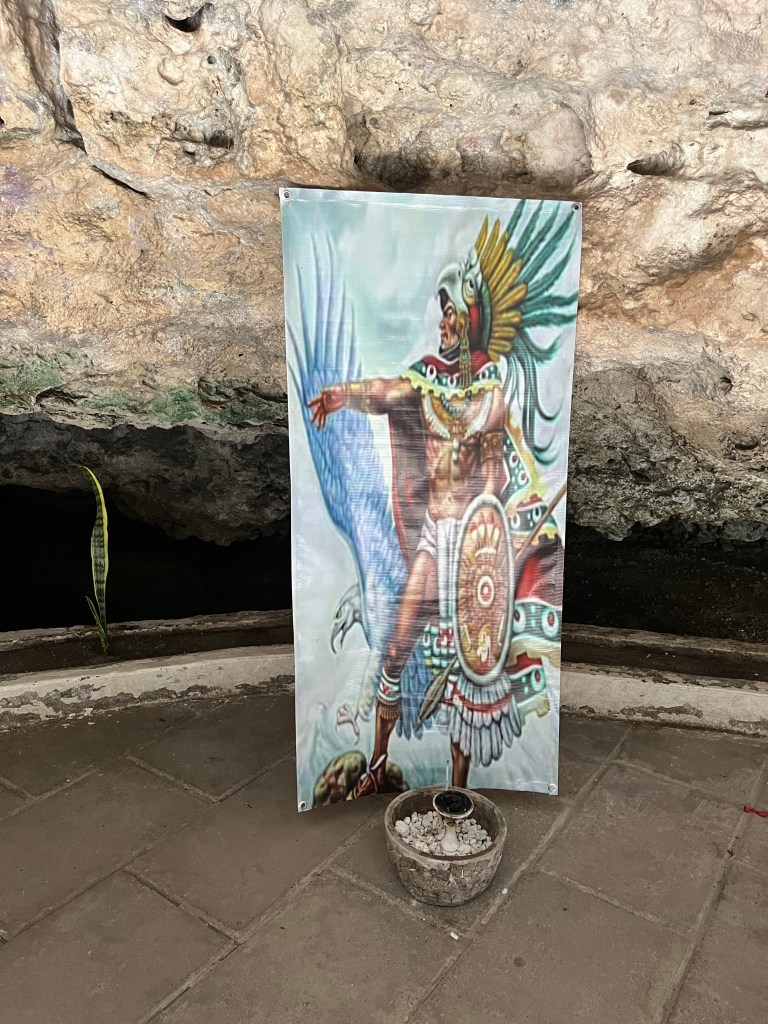
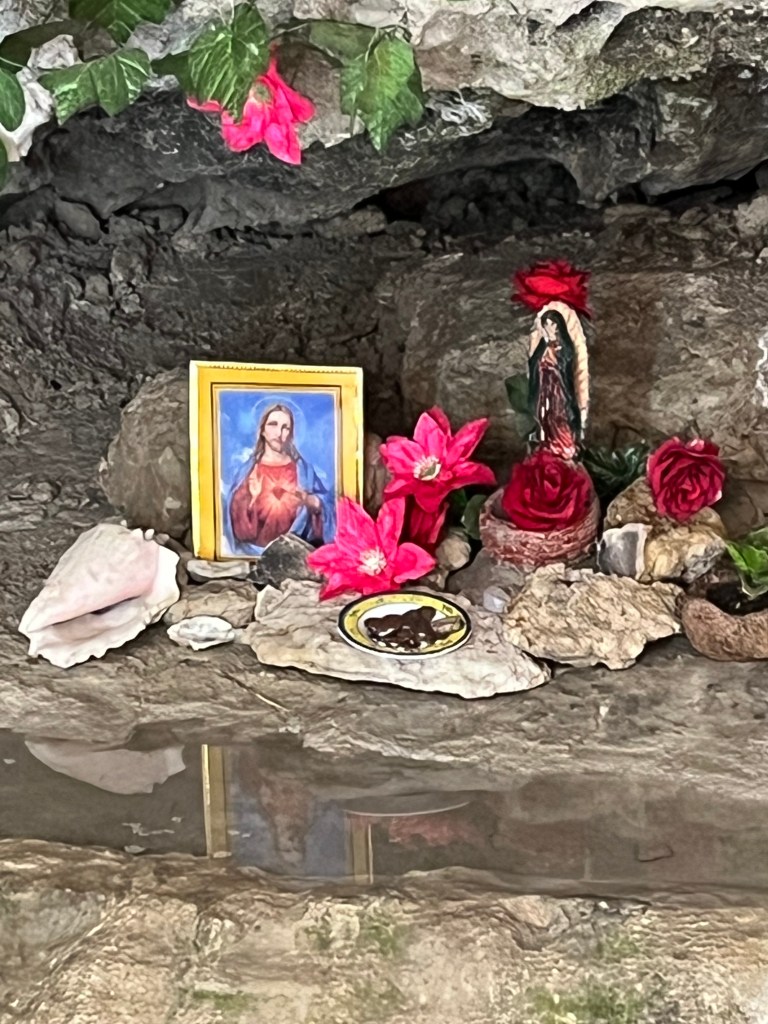
Well, there’s really not much more that I can say, except – if you ever get the chance to visit Puebla, you might want to make some time to visit this unusual site. Until next time – ¡ nos vemos !
 mex-pat.org