
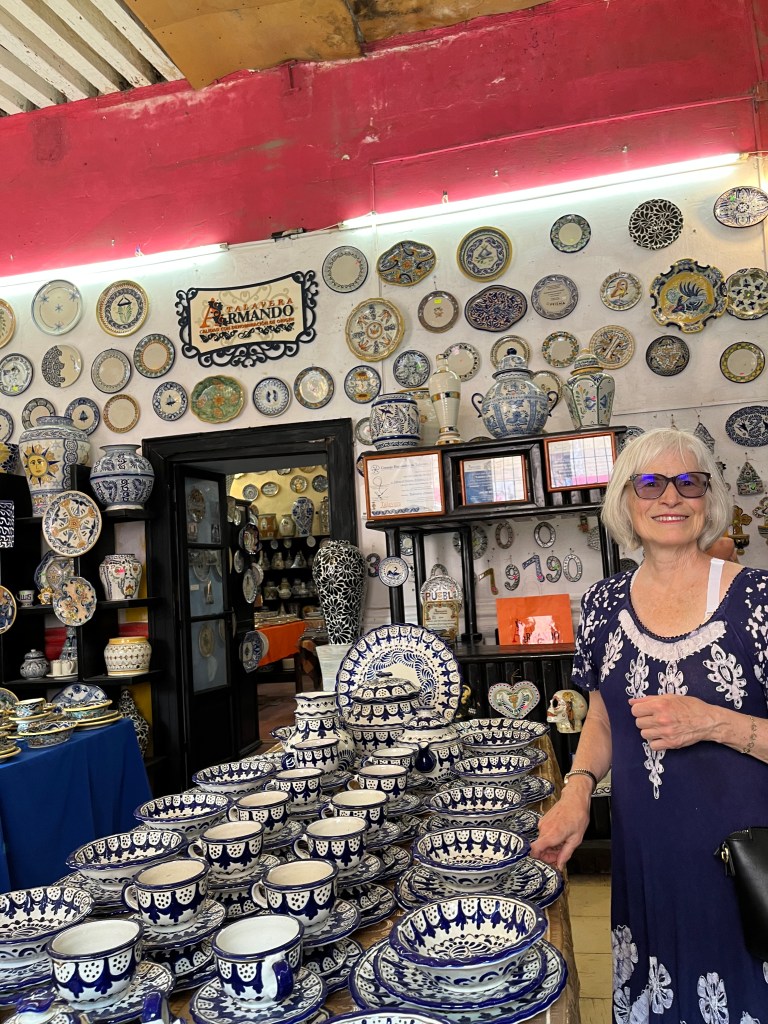
What exactly are the meanings of the words “Talavera” and “Poblana”? If you are familiar with chili peppers, you know the name chile poblano, which means a chili that grows in the state of Puebla, Mexico. The word “poblano” can refer to the people who live there, the type of cuisine there or even things such as pottery that is created there – all are “poblano” (or “poblana” if the word it is describing is feminine).
Talavera refers to earthenware covered with a lead enamel opacified with tin. Put the two words together and you have Talavera Poblana – ceramics of Puebla. Talavera Poblana is of such high quality that on December 11, 2019 it was given the title of Intangible Cultural Heritage of Humanity by UNESCO – the United Nations Educational, Scientific and Cultural Organization.
In addition to UNESCO, the Mexican Institute of Industrial Property has given Talavera Poblana the designation of Denominación De Origen, which is a recognition of Mexican products in three categories: drinks, artisanal products and natural products. Mexico has 16 products that have been given this classification.
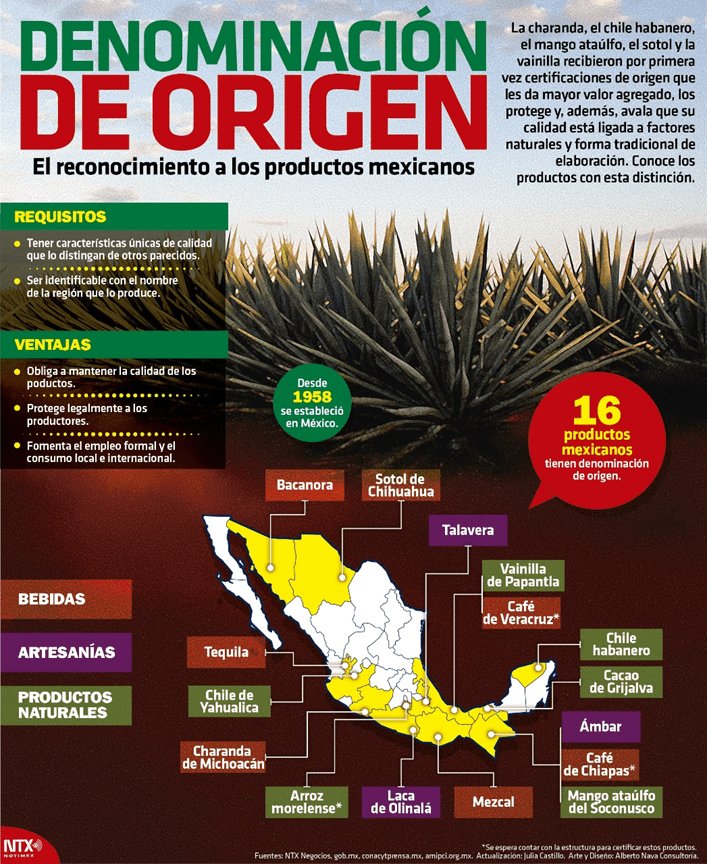
“Recognition of Mexican products. Requirements: To have unique characteristics of quality to distinguish them from similar products. To be identifiable with the name of the region that produces it.
Advantages: Obligation to maintain the quality of the products. Legal protection of the producers. Encourages formal employment and local and international consumption.”
When I visited Puebla last May, it was a pleasant surprise that I could visit a factory where this pottery was made, including seeing the process from the first shovelfuls of clay dug up from the earth to the finished product.
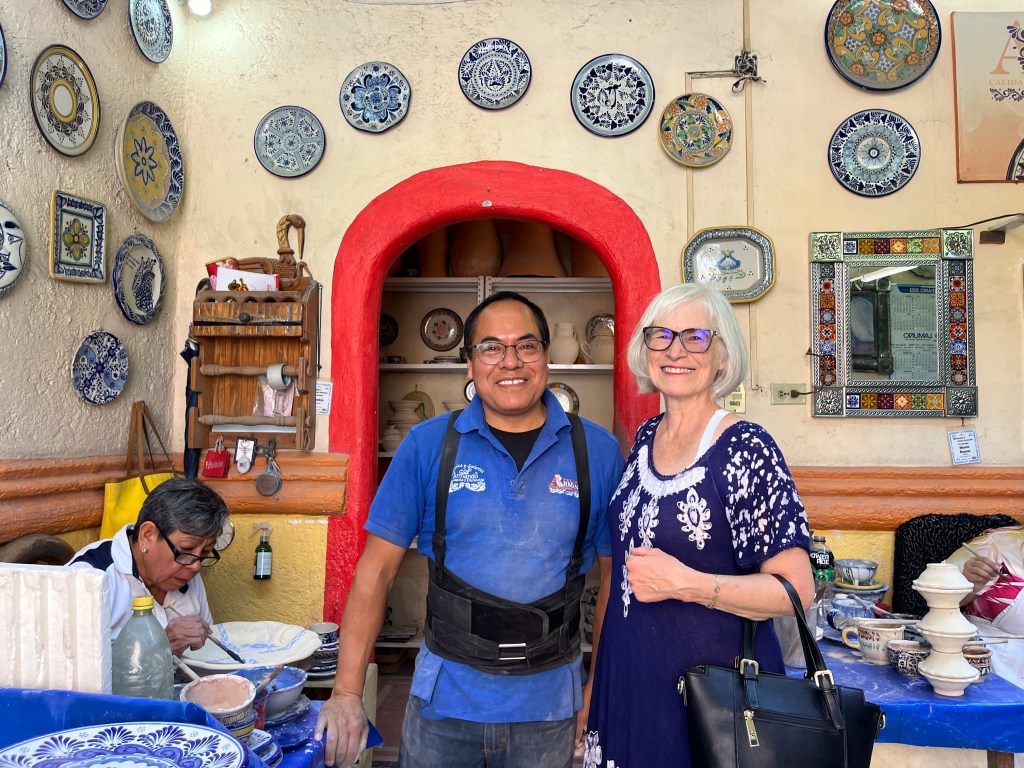
We will start with a photo of the outside of the store, where the finished products are sold. Behind the shop is the area where the clay is prepared.

There are two colors of clay which come from this earth, and in order to use them, they must first have impurities removed. The raw clay is put into a tub of water, and it is stirred with wooden paddles. The paddles are powered by a cable which is attached to a rotating drum.
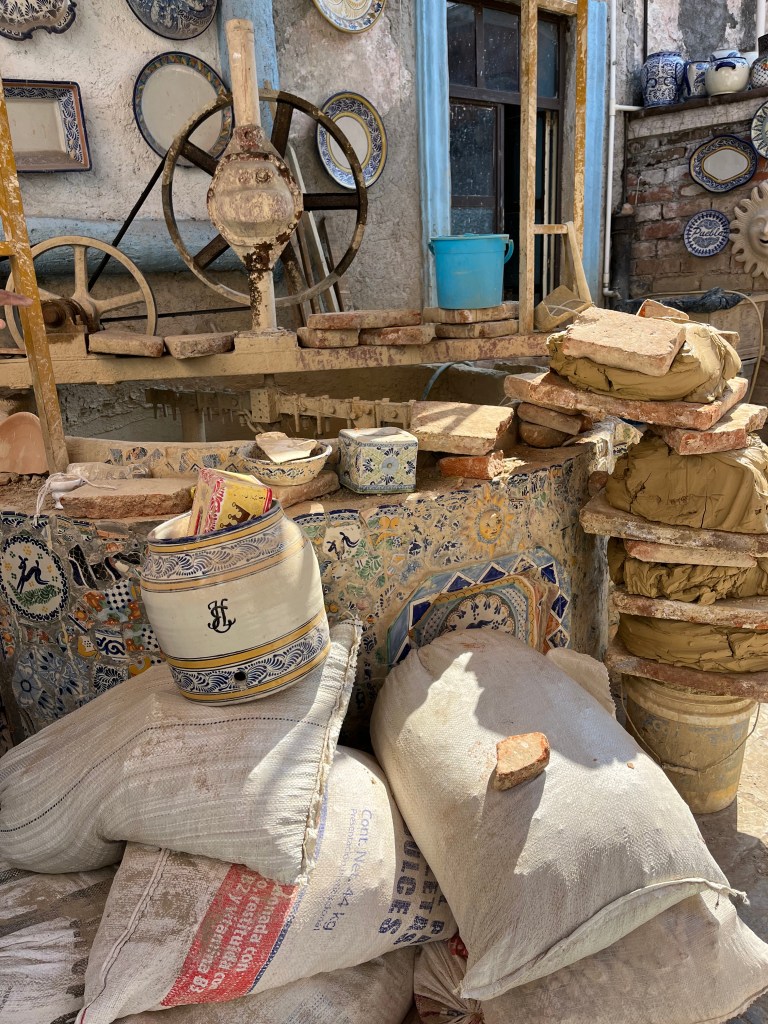
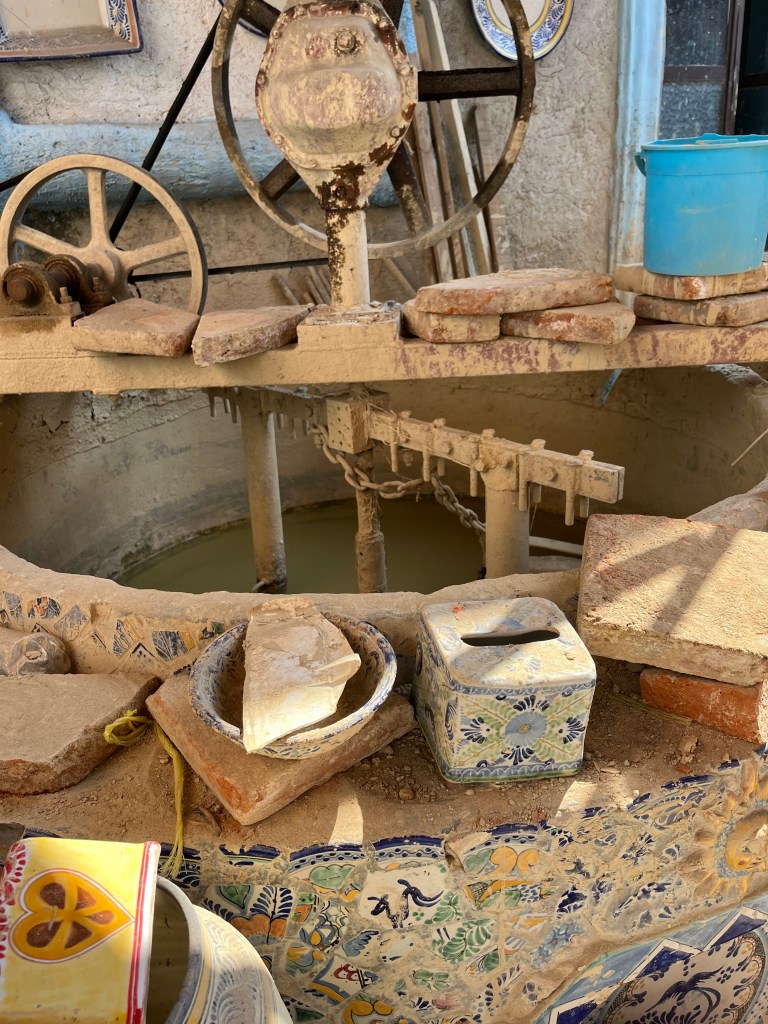
After a time, the clay-water mixture is placed onto a sieve where the water drains and the clay remains.
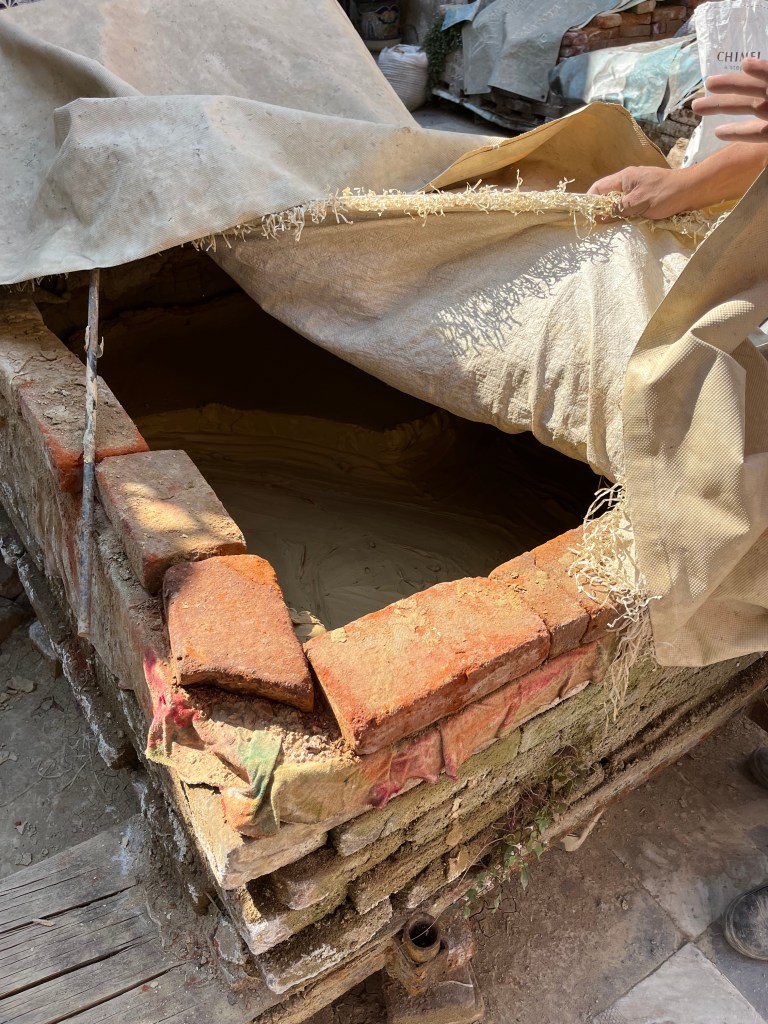
Once the excess water has drained, the clay is kneaded into blocks and is stored until needed.
Using a potter’s wheel or a mold, the clay will be shaped into whatever piece is needed – a plate, a cup, a vase or any number of other articles. Once completed, the pieces are put into a storage space which is unventilated to allow them to dry slowly and uniformly over time.
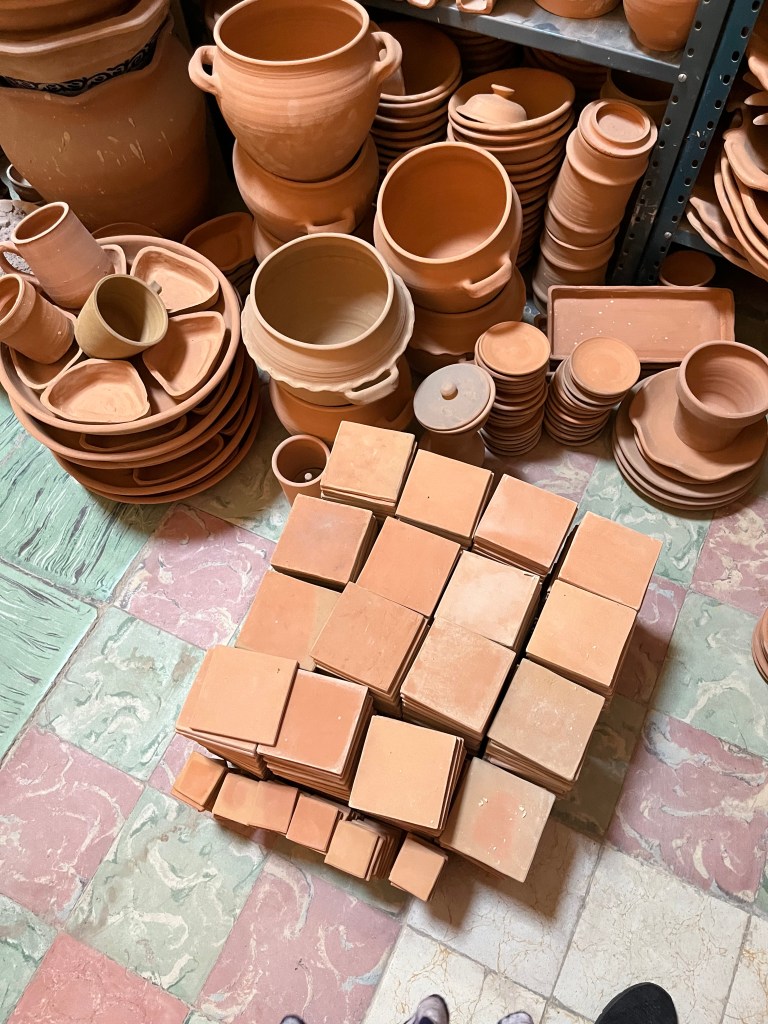

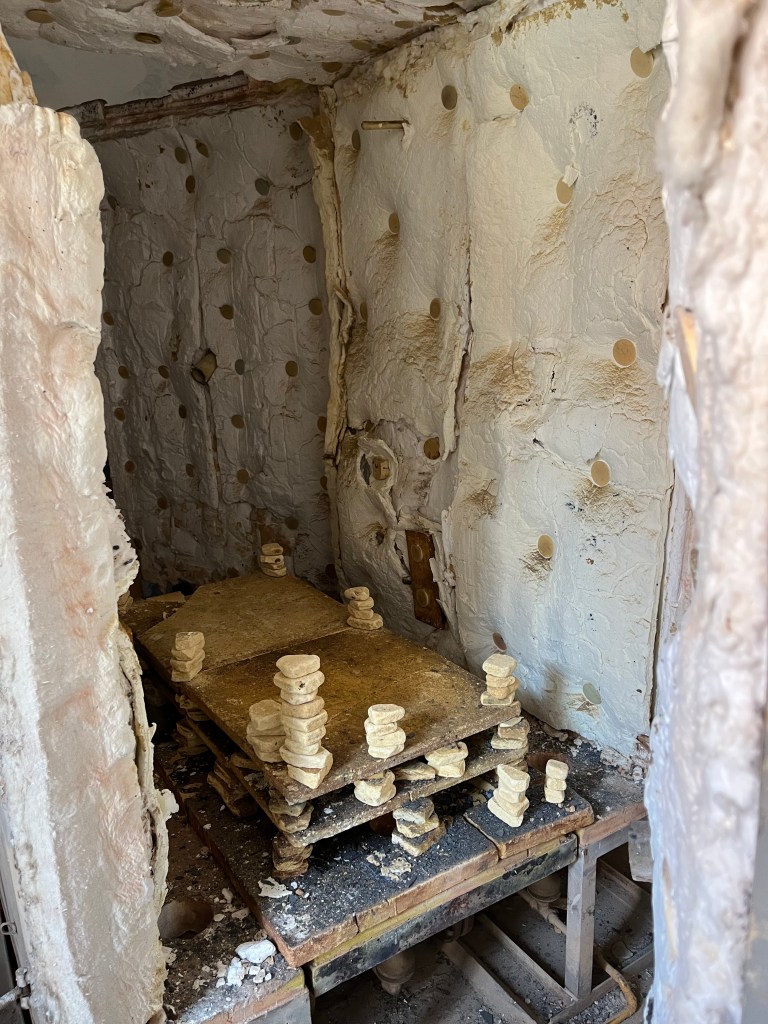
Once dry, they are put into a kiln at 800ºCelsius (1472ºFahrenheit) for 6 hours.
Once fired and cooled, they are dipped into a bath of an enamel made of tin and lead, preparing them to be painted. The traditional paint colors of Talavera are: yellow, red, blue, green and orange and the paints are made from local minerals.

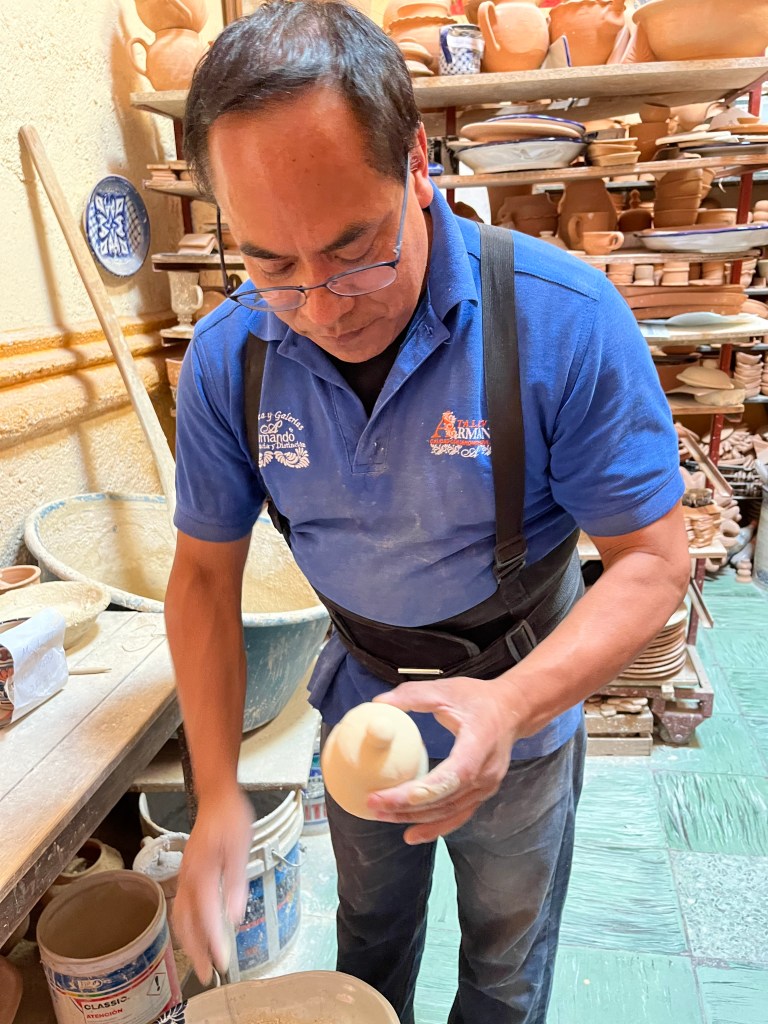
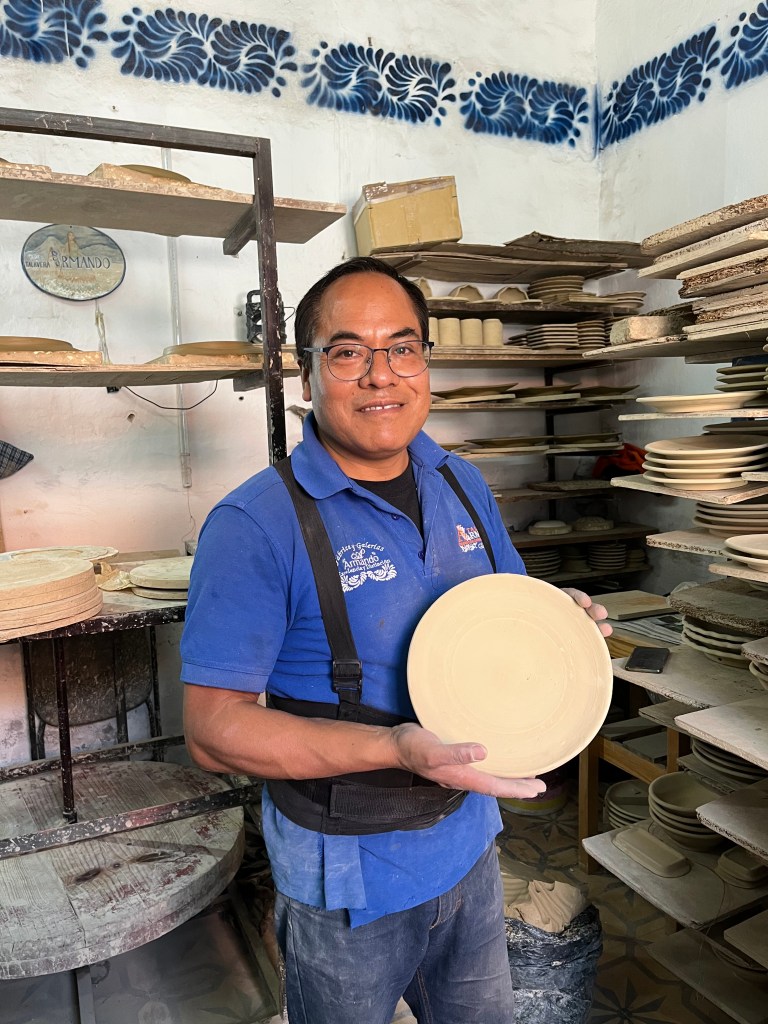
Dipping the pieces into the enamel bath
Every piece is painted by hand by the experienced artists and each piece is signed by the artist. Once the painting is done, the pieces are once again put into the kiln and baked at 1000ºCelsius (1832ºFahrenheit) for 8 hours. This firing hardens the glaze and also causes the paint to puff up, so that you can see and feel with your fingers that the paint is raised.
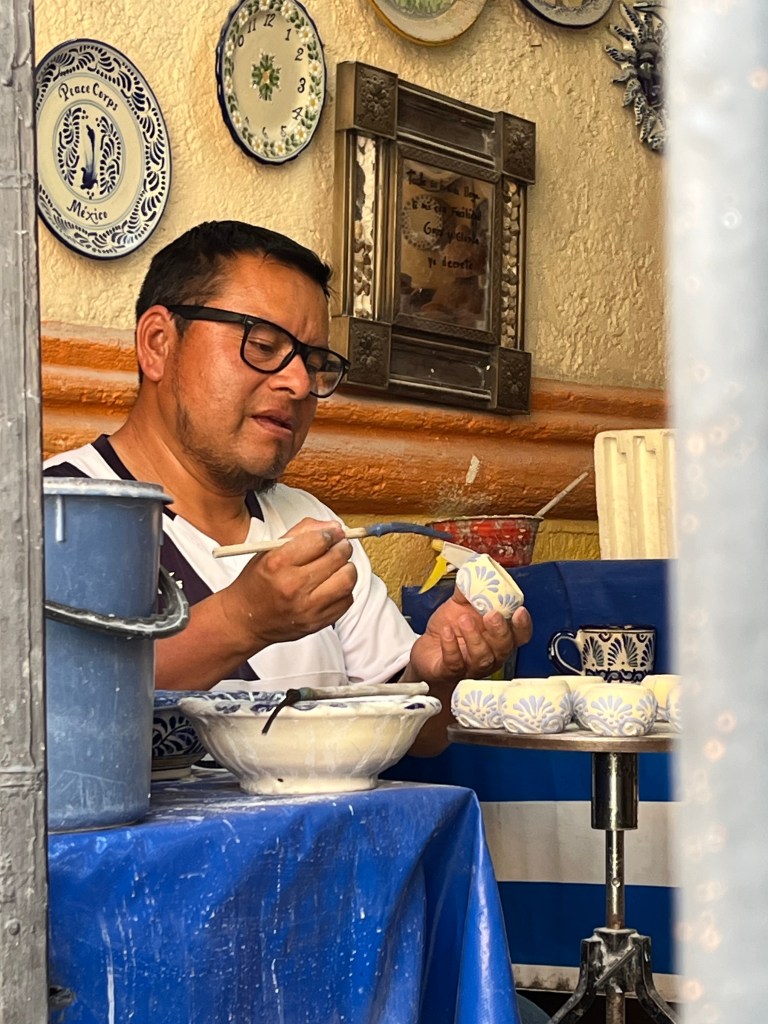
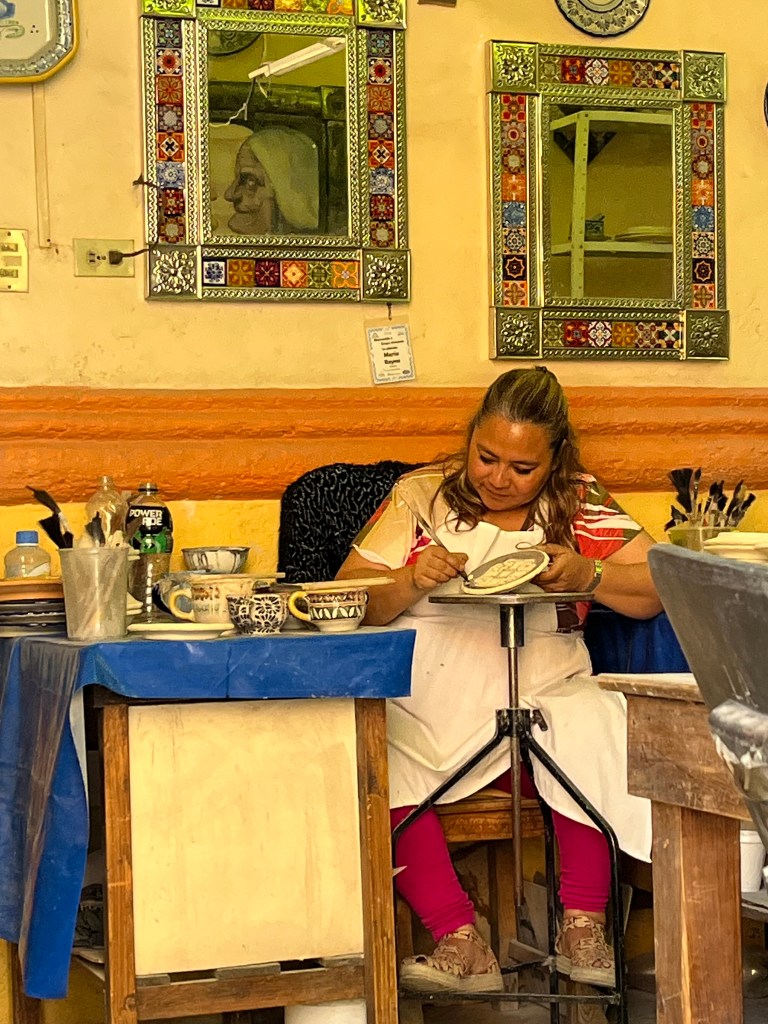


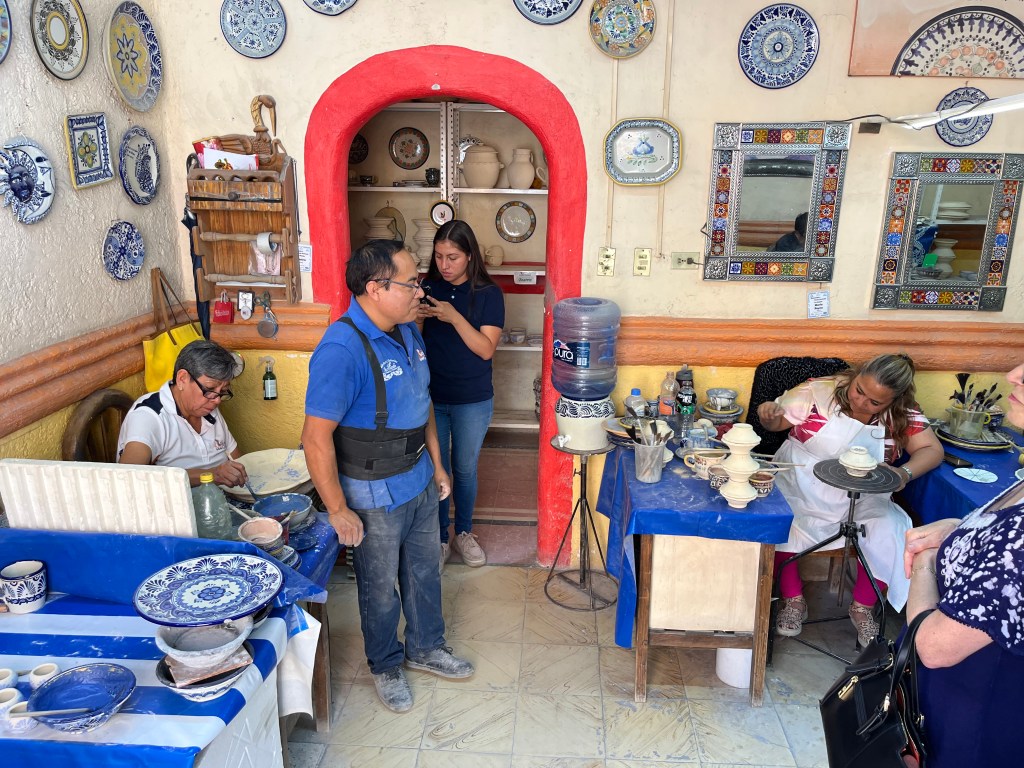
Some pieces are larger and/or more intricate than others and from start to finish may take from 3 to 6 months until completion. Viewing this process makes one understand why these pieces may be expensive. But ultimately, no matter how expensive, the time, labor and craftsmanship make it all worth the price.
 mex-pat.org