

Years ago, when I lived north of New York City, I was taking Spanish classes in the language school of New York University in Manhattan. The campus was near many ethnic neighborhoods, and since I love trying different cuisines, I would leave my home early, take the bus into the city and have dinner at a different ethnic restaurant before each class. The restaurants included cuisines of India, Ukraine and Afghanistan, among others.
Lately, I have occasionally been watching videos from Nigeria to pass the time and I noticed a few characters in the stories eating Jollof rice. Curious, I looked up some of the recipes and decided to try it myself.
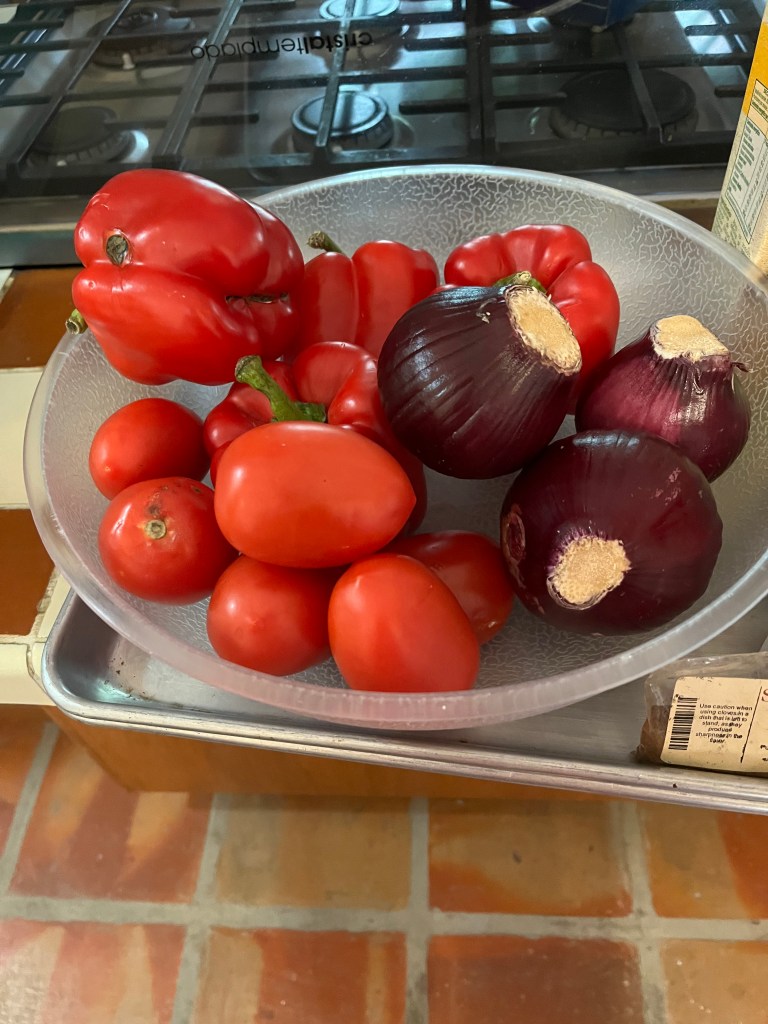
The first consideration was whether or not I could obtain the ingredients here in Mexico. Fortunately, the rice and vegetables were readily available.
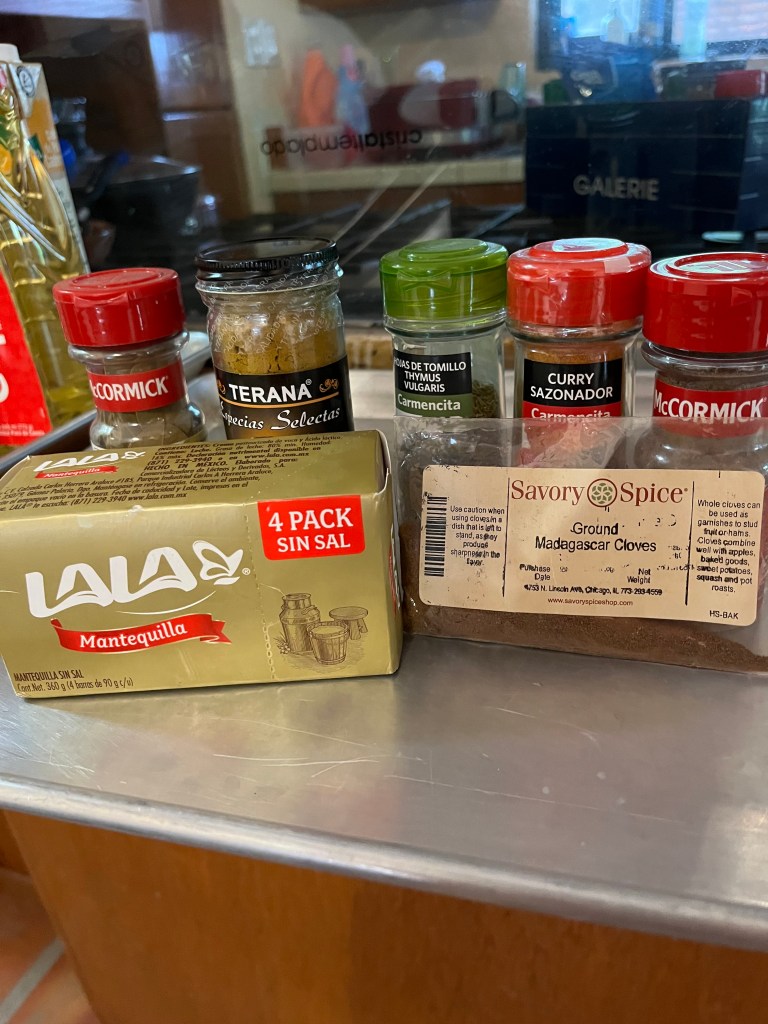
One thing I had to modify was the curry powder. The recipe calls for Caribbean/ Jamaican-style curry powder. Try as I might, I could not find it so I bought a bottle of Indian Style Curry Powder and one of Carmencita brand curry powder which seems to be similar to the Indian style but with a few different ingredients. Also keep in mind that the spices might have a different name in the language of the country in which you are.


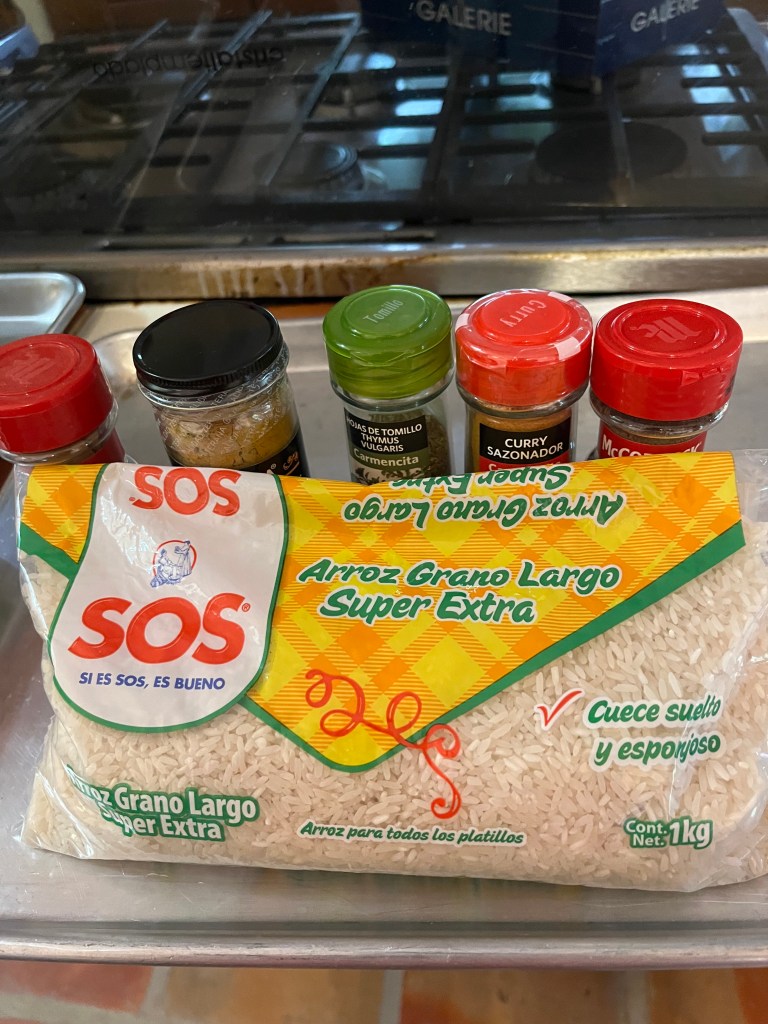
There are many types of rice, so I picked what I felt was the closest to the converted, long-grain that is listed in the recipe.
The next consideration is that I am highly intolerant to chili peppers. The recipe not only calls for curry powder, but also hot peppers and poblano peppers. What I normally do in this case is leave out the hot stuff altogether or make a substitution. In this recipe, they say I can substitute red bell peppers, which I did.
OK, slight pause here. Several people in the past have said to me, “You live in Mexico, and you don’t eat chilis?!?!?!?” My answer is – I live in my own house, I buy my own produce and cook it the way I prefer it. End of story….
Normally, when I am preparing a dish that I will be sharing with others, I bring a bottle of hot sauce or in this case I brought along both bottles of curry. The neighbors with whom I shared this dish spooned on their own chili that they kept in their house, preferring it to the curry.
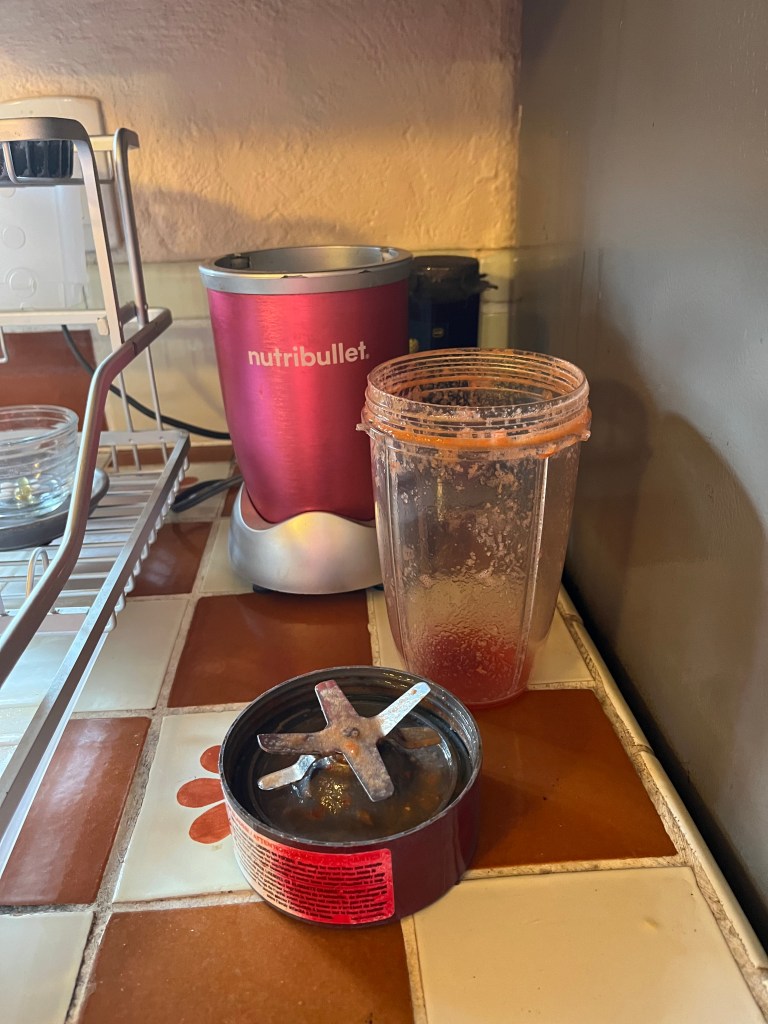
So – back to the recipe. The tomatoes, some of the onions and the peppers mixed with the stock were liquified in my Bullet. The rest of the sliced onions were fried separately and then added to the broth and finally the rice was cooked in the broth.

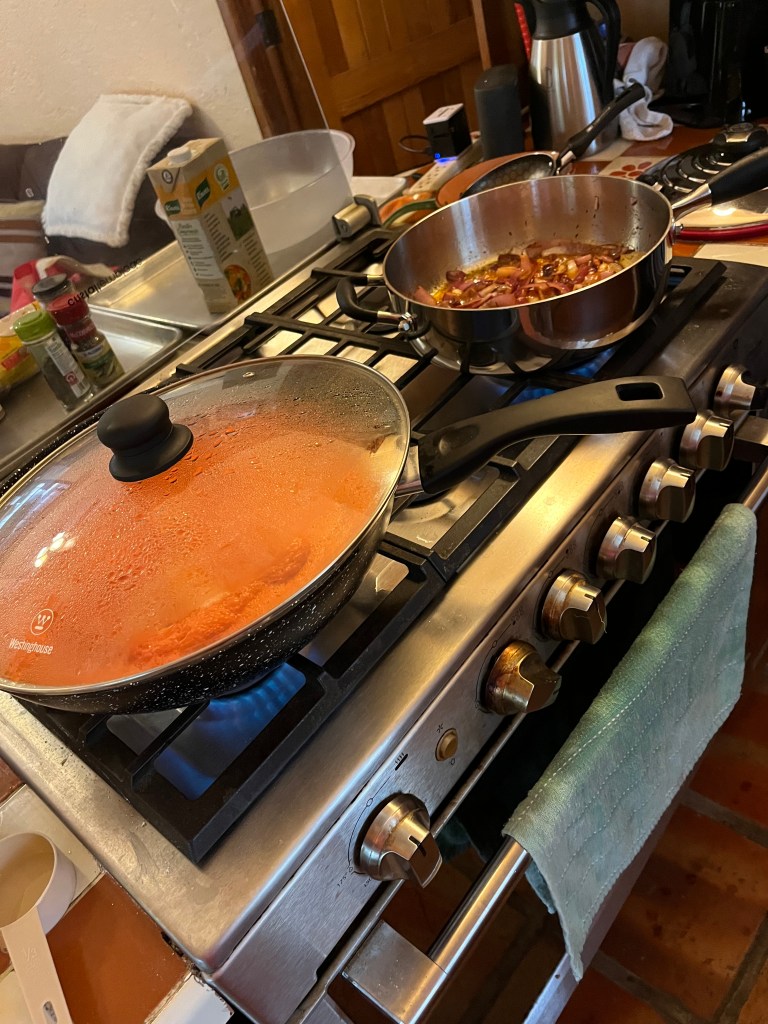
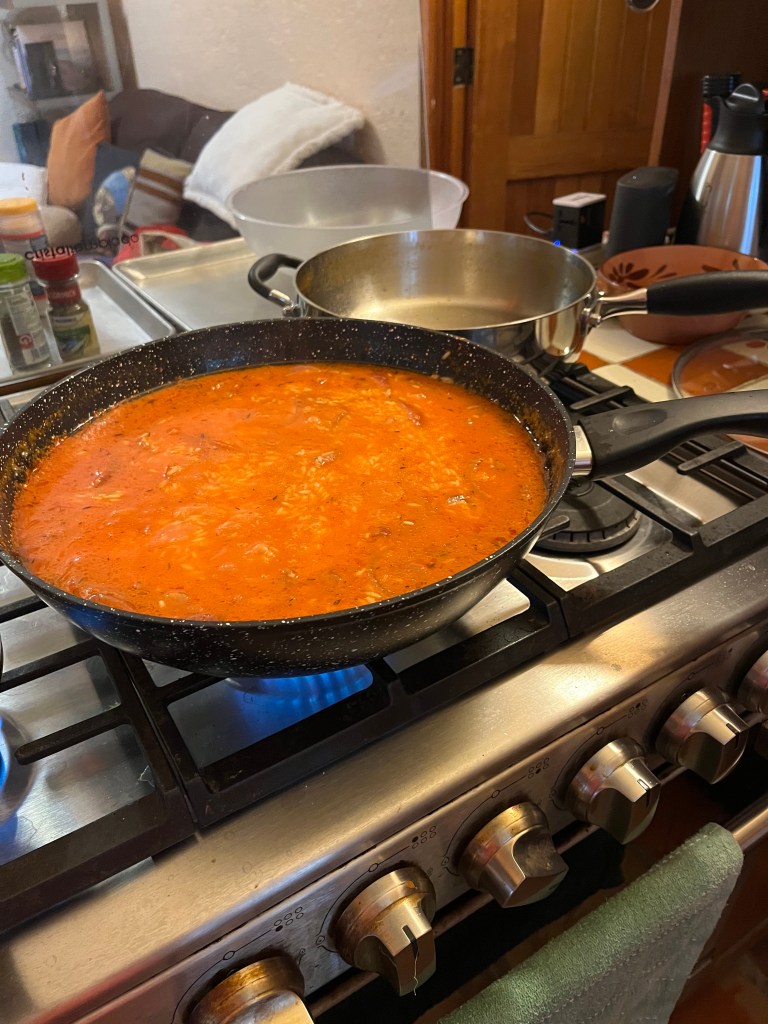
Frankly, it came out bland because of the spices that I left out. For me, whenever I have tried chilis, I didn’t even taste any flavor, just heat and pain. Depending on the chili, it burns my tongue, lips, throat with various degrees of pain. Occasionally, I can put a drop of the yellow label Valentina sauce (one drop, and making sure it’s the yellow label, not the much hotter black label) and I was able to put a miniscule amount of the Indian style curry on it.
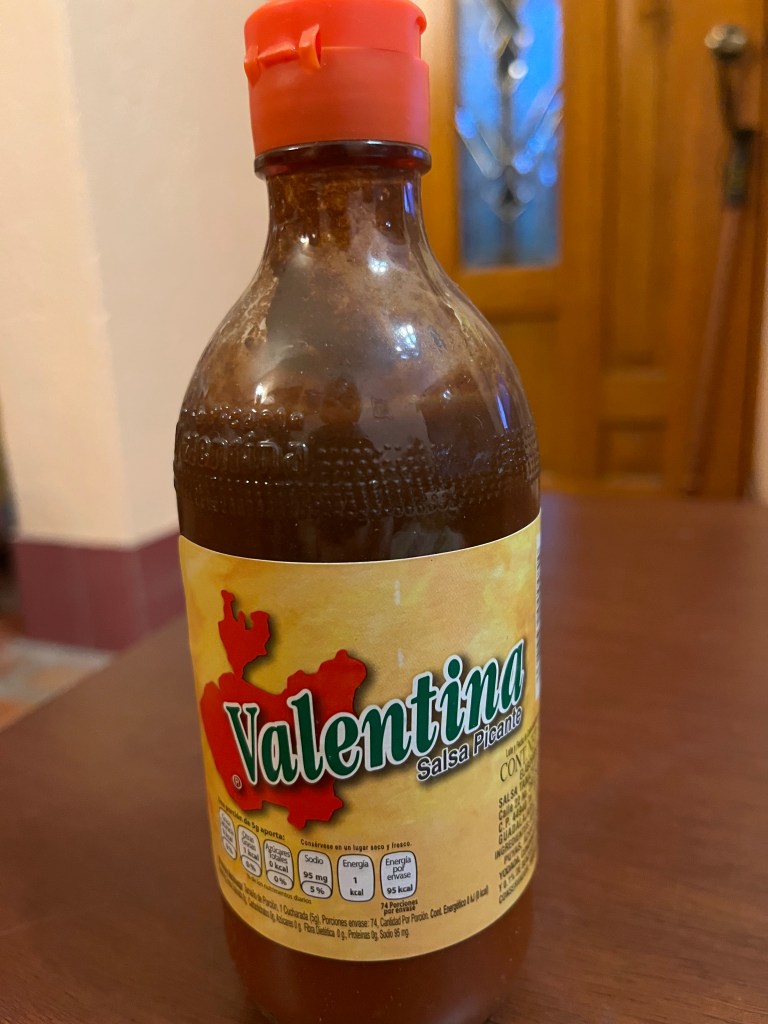
So I am sure that if you want to make it yourself, it will taste better with the chilis and curry. If you are someone who stays away from the picante (hot and spicy) condiments, you might try to add spices or herbs that you normally like.
And one more precaution for those of you with allergies or sensitivities. As I stated, I am pretty intolerant and can detect even a tiny amount of the offending substance, and I have had two unfortunate instances in the past few months.
At a restaurant in Puebla, I ordered a dish with a red sauce. I was assured it wasn’t picante. I tasted it and immediately felt the pain. My friends tried it and agreed, although they liked it. We called over the waiter and explained that there was chili in it. My friend and I switched plates, but explained to the waiter that for me, it was just an intolerance, but there might be a customer with a genuine life-threatening allergy and it would be much more serious. We just nicely explained the situation so that he would understand when a future client says they have an allergy or intolerance.
The next situation was several days later in a Wings restaurant in the Mexico City airport. I thought that lasagna was a safe choice. The waiter set the plate in front of me and poured the red sauce on top. One bite told me I wouldn’t be able to eat it. I called the waiter over and explained the situation to him the same way my friends and I explained it to the waiter in Puebla. He was very nice and apologetic. I scraped the sauce off, and he brought me non-picante red sauce. I left him a generous tip.
Sometimes the recipe itself does not contain hot and spicy ingredients, but if the pan in which it is prepared was not washed thoroughly enough, it will end up in your dish. Just something to be aware of and a nice way to inform the staff.
Anyway, that’s about it for now. In case any of my readers want to try it, here is the recipe. Enjoy, and have a great day !!!
Classic Nigerian Jollof Rice
Ingredients
1/3 cup of oil (vegetable, canola or coconut – NOT olive oil)
6 medium sized fresh plum/Roma tomatoes, chopped, or a 400-gram tin of tomatoes
6 fresh, red poblano peppers (or 4 large red bell peppers), seeds discarded
3 medium sized red onions (1 sliced thinly, 2 roughly chopped), divided
½ to 1 hot pepper, or to taste (yellow Scotch bonnets were suggested)
2 teaspoons (Caribbean/Jamaican-style) curry powder
1 teaspoon dried thyme
2 dried bay leaves
5-6 cups stock (vegetable, chicken or beef) or water, divided
2 teaspoons unsalted butter (optional), divided
4 cups uncooked converted long-grain rice or golden sella basmati, rinsed
Salt, to taste
Black and white pepper, to taste
Extra: sliced onions, tomatoes
Directions
- In a blender, combine tomatoes, red poblano (or bell) peppers, chopped onions, and Scotch bonnets with 2 cups of stock, blend till smooth, about a minute or two. You should have roughly 6 cups of blended mix. Pour into a large pot/pan and bring to a boil then turn down and let simmer, partly covered for 10-12 minutes.
- In a large pan, heat oil and add the sliced onions. Season with a pinch of salt, stir-fry for 2-3 minutes, then add the bay leaves, curry powder and dried thyme and a pinch of black pepper for 3-4 minutes on medium heat. Then add the tomato paste – stir for another 2 minutes. Add the reduced tomato-pepper-Scotch bonnet mixture, stir and set on medium heat for 10-12 minutes till reduced by half, with the lid partly on. This is the stew that will define the pot.
- Add 4 cups of the stock to the cooked tomato sauce and bring it to boil for 1-2 minutes.
- Add the rinsed rice and butter, stir, cover with a double piece of foil/baking or parchment paper and put a lid on the pan – this will seal in the steam and lock in the flavor. Turn down the heat and cook on the lowest possible heat for 30 minutes, stirring halfway through.
- Stir the rice – taste and adjust as required. If rice isn’t soft enough/needs additional cooking, add ¼ – ½ cup of stock or water, stir through and continue to steam, on low till cooked through.
- If you like, add sliced onions, fresh tomatoes and the 2nd teaspoon of butter and stir through. Let rest, covered for 5-6 minutes.
- To make Party Rice, you’ll need one more step. Now Party Rice is essentially Smoky Jollof Rice, traditionally cooked over an open fire. However, you can achieve the same results on the stove top. Here’s how: Once the rice is cooked, turn up the heat with the lid on and leave to “burn” for 3 – 5 minutes. You’ll hear the rice crackle and snap and it will smell toasted. Turn off the heat and leave with the lid on to “rest” till ready to serve. The longer the lid stays on, the smokier. Let the party begin !!!
 mex-pat.org