
In the normal course of the day, if you want to know the weather, you look outside your window or you go outside. If you want to know how to dress for later in the day, you can look online or on the television for a weather forecaster to tell you what type of weather to anticipate. None of the forecasting is 100%, so they give you their estimated percentages of each possibility.
Living away from cities of glass and steel as I am, I can also look through my window or go outside. I can see the weather forecast via television meteorologists or on the internet. When it is dark and cloudy, it might indicate rain is coming or only a heavy mist, for instance. However, living among nature, one can detect seasonal changes and with time recognize whether the seasons are progressing normally or if the timeline will be different.
In my part of Mexico we have the rainy season and the dry season. Normally, the rainy season begins mid-June and ends sometime around the end of October/early November. Near the end of the rainy season begins what I call “spider season” with outdoor spiders spinning webs everywhere – and I mean EVERY where. So much so, that I walk around with a stick, swinging it in front of me as I walk so as to avoid getting a face full of web, since many times the webs are invisible unless the sunlight hits it at exactly the right angle or it glitters in the sunlight with dew. This past rainy-to-dry season was unusual, in that the last spider was in February, which was very late.
One harbinger of the coming rainy season is the cicada. They provide a constant background noise, and occasionally a very loud continuous noise. Currently they are providing a low constant hum that I have gotten used to and most of the time don’t notice. .
But the most obvious indication of the coming rain is the appearance of the sapos – the cane toad. For the most part, they disappear during the dry season – with some exceptions, such as living openly all year round at a friend’s nearby ranch. When I was growing pumpkins, I would find them on the ground under the vines waiting for a meal of insects. Those of us who own pets also know that they love dog food and cat food.
Currently it is the second half of April, so historically we have almost two months until the rains begin. However, recently I heard a scraping of my cats’ food dish and went out to find a juvenile sapo eating their dry food. It turns out that this is not a one-off. The little guy has been showing up for a few weeks. In addition to eating the dry food, I have deduced that he is using the water bowl as his personal pool, because I also noted that there has been dirt in the water.
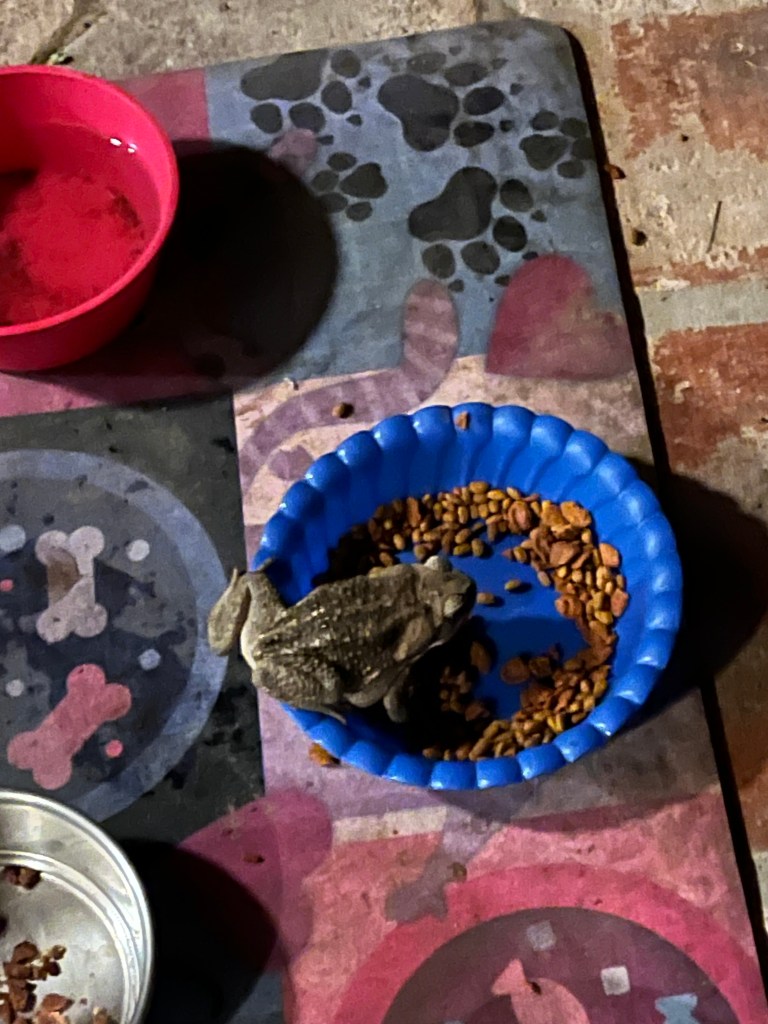
A big problem between sapos and other animals is that the sapo excretes a poison through its skin. If a cat or dog licks or otherwise ingests some of the secretions, it will become very ill and probably die. Same with drinking the water in which the sapo has refreshed itself.
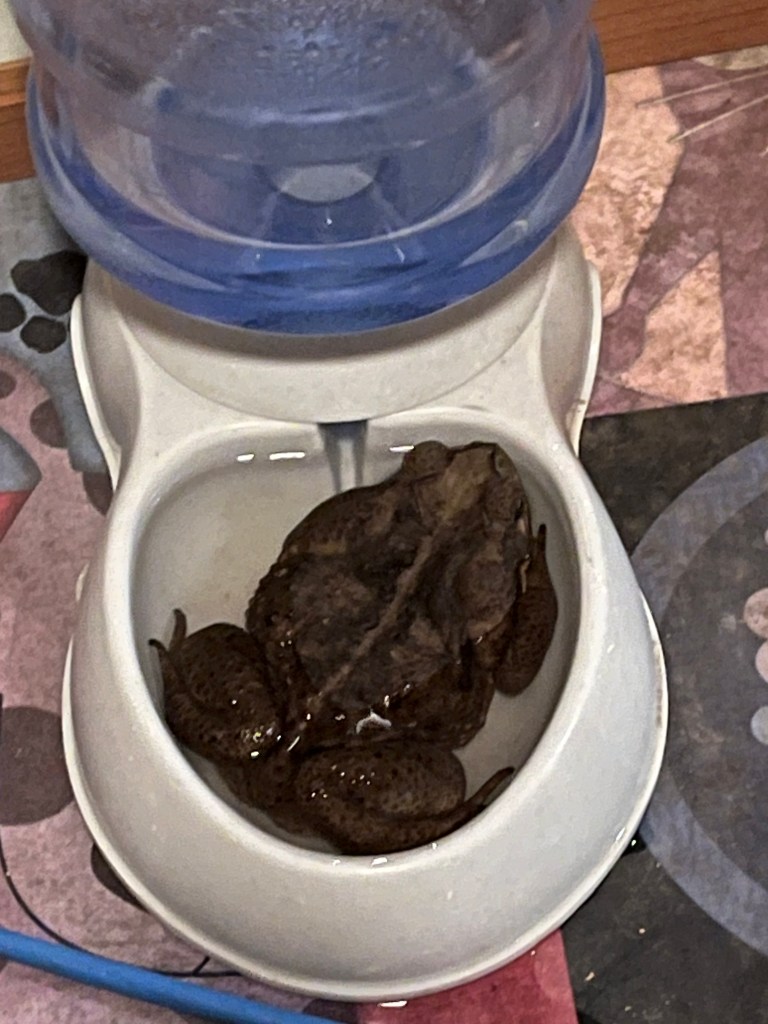
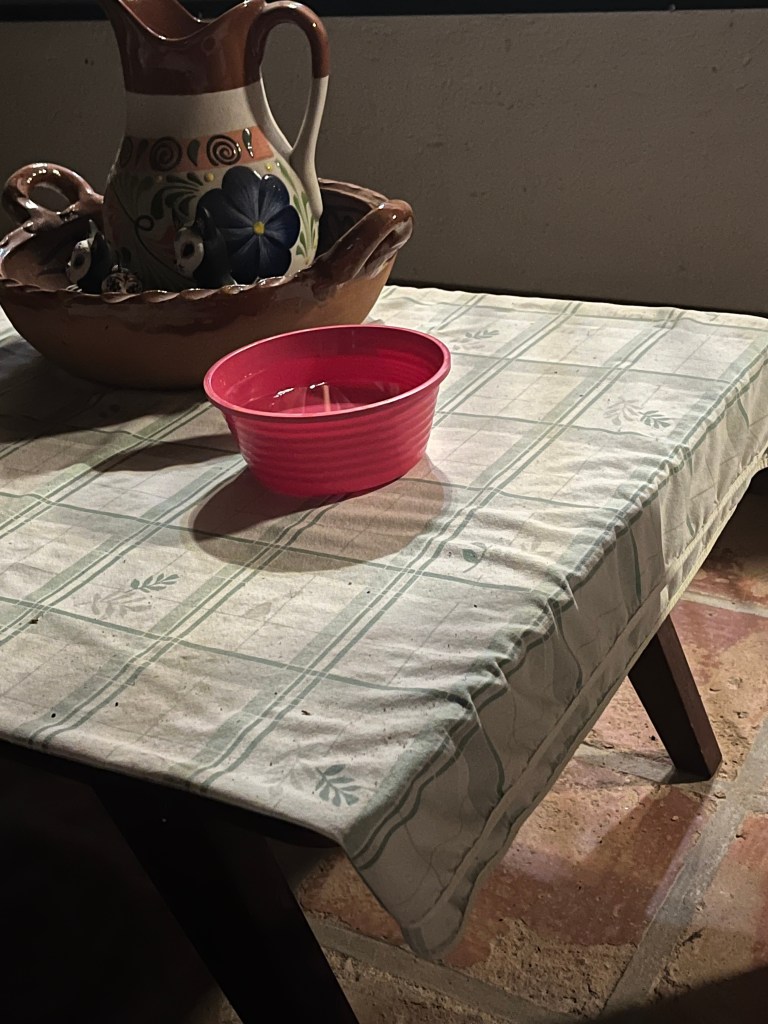
So now I make sure to not leave any dish, especially one containing food, out at night. Since my cats need water, but the sapos cannot jump, I place the water dish on a table.
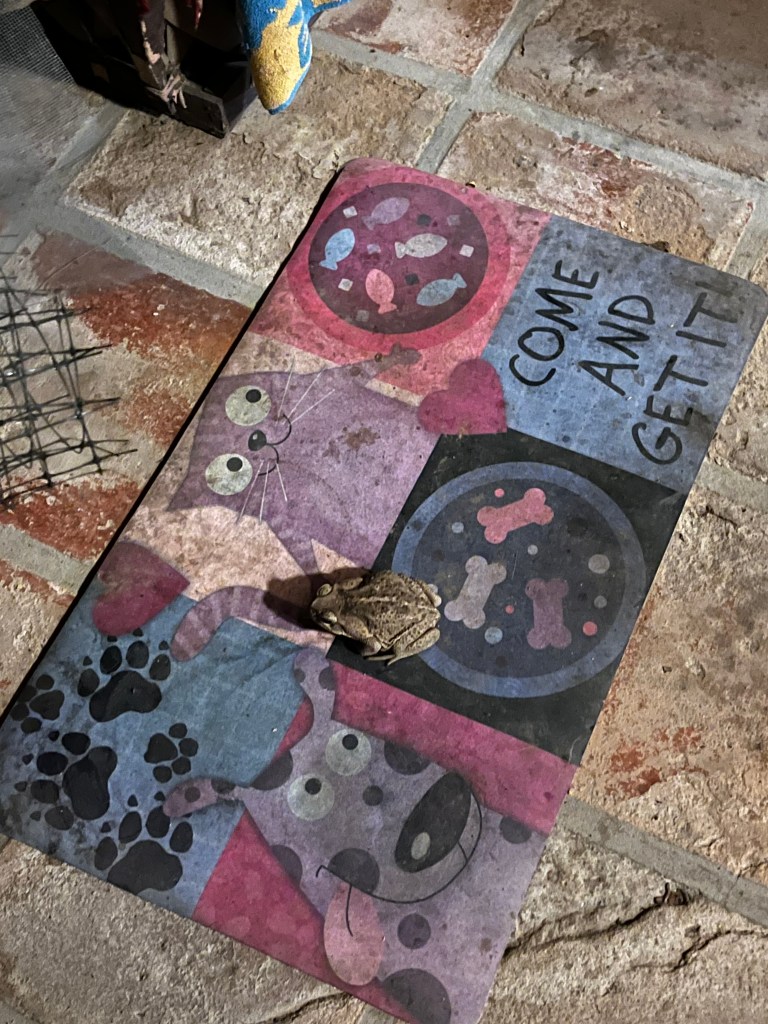
I noticed that the juvenile was still waiting on the floor mat once I stopped leaving out food and water. It was as if he were saying, “OK, where’s my food?” Now he just hops around my cobblestone walkway, hopefully finding some delicious insects for dinner instead of catfood.
I’ve been living here for 10 years now, and this is the first I’ve noticed how early are the signs of impending rain concerning my amphibious and insect friends. However, last month, I believe we had 4 thunderstorms and viewing weather satellites of Mexico online, I could see enormous cloud cover over the greater part of the country. It might have been 4 or less, I didn’t write down each time we had the storm. I really need to start documenting.
Apart from the insects, toads and spiders, I have noticed seasonal changes with my coffee crop. When I began growing and harvesting coffee, I could leave the depulped coffee beans on my outdoor drying table 24 hours a day for 5 days and they would be completely dry. Over the past few years, I have had to bring them in at night, as there would be so much nighttime moisture in the air that there would be puddles on my drying table, leading to mold forming on the beans. This past year I needed to use a food dehydrator at times to sufficiently dry them – at 105 degrees F. for several hours so as not to damage them from too much heat.
I have been harvesting and processing coffee many more years than I have been growing and processing cacao into chocolate, so I can’t say how the change in climate has affected the process, only to say that I was finally able to find a carpenter to make me a fermentation box, since the cacao beans need to be fermented before they are toasted, and need to maintain the heat of fermentation during the process.
For me, I am curious about these things and love learning through observation and also studying about what I observe. Changes, such as what I have observed, are more important and urgent for the farmers who earn a living through selling their crops, and I am concerned for them. Colima is an agricultural state and all things agricultural affect the farmers’ and ranchers’ ability to make a living and provide food for everyone.
This post is not meant to be a lecture on climate change – only notes on what I have observed with my own eyes in my garden. Even if you live in a city surrounded by glass, chrome and steel, there are opportunities for people of all ages to observe and learn about nature, such as parks, botanical gardens, even going to the seashore – nature isn’t only green.
 mex-pat.org
Thanks for this great information and the cool pictures! Indeed, we learned about cane toads the hard way, when our young, innocent dog Tofi came in contact with one, seized severely and died. I didn’t realize there was a season, so we will be more careful!
LikeLike