Ted Rose and Susan Hill – The Project Amigo Story

We all know that great, strong oak trees from little acorns grow, and sometimes from the tiniest mistake great things can happen.  All one needs to do is look around, absorb everything you can about the experience, and consider the possibilities.

Being in the wrong place at the right time is exactly what happened to Ted Rose. Ted loves volcanoes, and in 1984 decided to explore the famous Volcan de Fuego (Volcano of Fire), the active volcano on the border of Jalisco and Colima States in Mexico.  Ted’s wife Susan Hill speaks Spanish, but at that time, Ted did not. Because Susan was not with him, he ended up on the wrong bus, and instead of visiting the volcano, he found himself in the little village of Cofradía de Suchitlán – alone, no idea where he was, and unable to communicate.

A young Mexican child noticed this stranger, and took pity on him. He showed Ted around the village, and then brought him to the albergue , a dormitory for students from outlying villages run by the state. At that time, there were no schools for the children of the other villages, so they attended the school in Cofradía de Suchitlán.

When Ted returned home, he and Susan had a discussion about what they could do for the poor people of this village, and for the next 3 years, they would return bearing loads of gifts.

Over time, Susan realized that giving gifts alone was not helping these people. Ted is a Rotarian, and the motto of Rotary is “Service Above Self.” Also in Susan’s mind was the story about “Give a man a fish and he can eat for a day; teach him how to fish and he can feed himself for the rest of his life” which emphasized that this problem needed a different approach. So after much thought and discussion, Ted sold his car and his business in California in 1986, and he and Susan moved down here with a bunch of typewriters and opened a typing school, thereby hoping to give marketable skills to the students so that they could more easily find jobs. And it worked – in two years, 8 out of their 12 students were able to get jobs because of the skills they learned in the typing school.

In 1984, the first of the annual Christmas Fiestas was held, and field trips have been added over the years.  For the Christmas Fiesta, more than 300 children each year are given gifts of clothing and shoes and treated to food and fun activities. Field trips include visits to the beach, airport, zoo, archeological ruins, among other places of education and interest.

Scholarships were first offered in 1996. These scholarships provided for tuition, clothing and books in their schools.  In 2002, the high school graduates broached the idea of obtaining an education at the university level, and so scholarships were now extended from kindergarten through university, and today we now have more than 59 university graduates through Project Amigo in such varied professions as medicine, nursing, engineering, law, accounting, architecture, to name just a few, and our numbers are an indication of the success of Project Amigo in promoting education; the national average for students who complete high is just 5%, while 75% of Project Amigo’s high school graduates enter the university, with most of them continuing through graduation.

Throughout the growth and development of Project Amigo, observations would be made that resulted in additions or changes to the program, so that it is constantly evolving to suit the needs of the students and community.

One of these observations was that only 40-50% of the students remained in the scholarship program from year to year, except in Cofradía, where the students would seek out Ted, Susan and the staff to use their computers in the evening and ask for help with their homework. This led to weekly visits to other villages to similarly help the students, and now one of the requirements for retaining their scholarships is that the students participate in the homework clubs. There are also computer labs in several villages for use by the students.

Another observation was the distance students had to travel to attend higher education.  In 2001, the first “Casa Amiga” was rented, providing our scholars attending high school in Colima with a place where they could live, eat and do their homework.  Most of the residents at that time then continued on to attend and graduate from the University of Colima.

The current Casa Amigo was donated by Catherine Munson, was remodeled courtesy of donations from board members and other donors, and was furnished with funds provided by a Rotary Foundation Matching Grant. With the addition of a second floor providing a new study area, Casa Amiga will be able to house 28 students.

In all of the work being done by Ted and Susan and Project Amigo, education is the goal to help the impoverished children of this area of  rural Mexico to be better prepared to support themselves and their families, which also enriches their communities.  Ted, being a Rotarian from California, had many contacts in the world of Rotary International, and Rotary has been heavily involved in Project Amigo – primarily Rotarians in the United States, Canada and Mexico.  From building classrooms to providing mini-libraries and “books of their own” to donating clothing and supplies and so much more, the lives of these children, their families and communities are being changed one step at a time, and all because a man who loved volcanoes and didn’t speak a word of Spanish took the wrong bus and not only decided to turn a lemon into a whole plantation of lemon trees but also to build the lemonade factory so that the figurative  lemons of Cofradía, Suchitlan, Quesería and other areas in need would become delicious lemonade for all.

Among the many ways to help are sponsoring a student or becoming a volunteer during a work week. To find out more information about Project Amigo and how you can help, please visit the web site at www.projectamigo.org .
 

20160605_192254
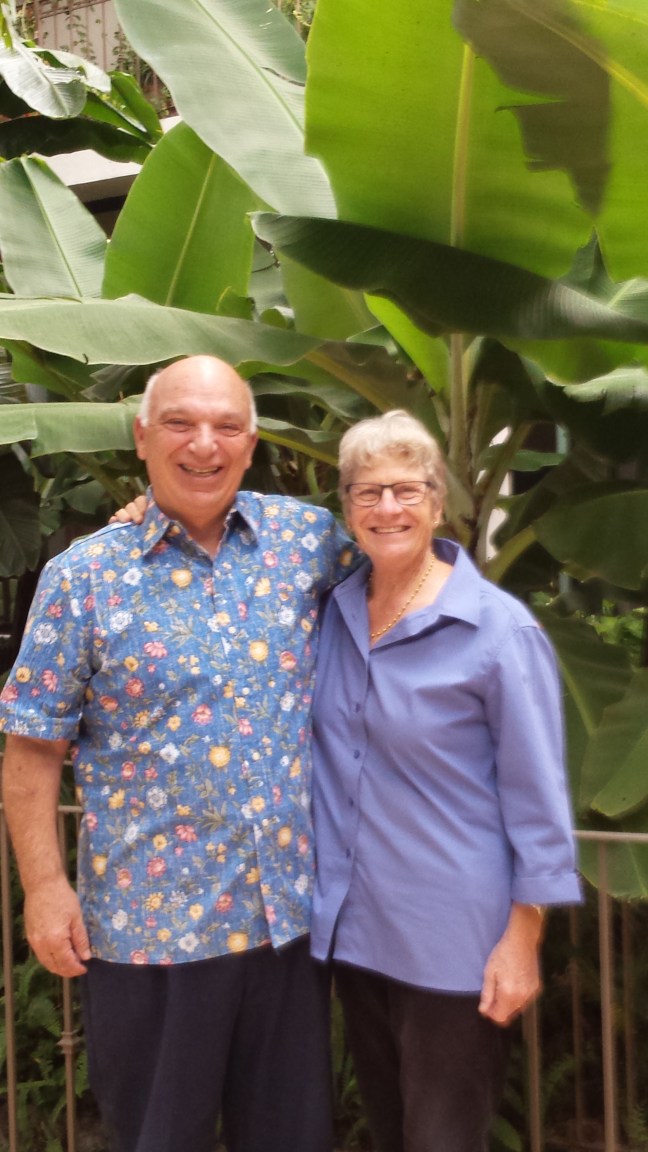
Ted Rose and Susan Hill

Warning -Read my disclaimer before going any further

OK – the subject matter I am about to discuss will literally make some people sick, so if you have a delicate stomach, please go no further, because I don’t want to be responsible for anyone becoming anorexic.

A few people, such as my son, and maybe my niece Catherine Butzen, won’t be surprised at what they will read, and the fact that I am fascinated by such things, and could even bring myself to participate out of curiosity. But – if I need to be more specific, this post talks about, and has photographs about, insects in the diet of many areas of Mexico. And – to answer a question that is burning in many people’s minds, yes, I DID try some of them.

So, here goes – you have been warned. Continue at your own risk.

Yesterday was the beginning of a 3-day gastronomia festival at the Casa de la Cultura in Comala. The first two days will be right here at the Casa, and the third day, Sunday, will be in the jardín with many vendors selling their wares.

I went with my friends Richard and Magda, who were selling their produce, as well as chutneys, jams, honey, fresh-cut lavendar, etc. Next to us was a vendor selling knives, and next to him was a table with tee shirts and cookbooks.

Inside was a large room where the lectures would take place. There were many chairs set up for the audience, and a cooking area, where food would be cooked as the lecturer explained the process. After that, some of the food could be tasted by the audience. Before the lectures/demonstrations some volunteer firefighters brought in two fire extinguishers.

The first lecture, now remember everything is in Spanish, seemed to be about what you must consider when preparing food – such as origin of the food, flavor and presentation. Then a dish was prepared of fresh bacalao, veggies and sauce. The speaker took us step-by-step through the process and ended up with a very elegant plate of the prepared food.

There was a short break and then the next lecture began. On the screen were pictures from pre-Colombian times of men and corn. The lecturer started talking about corn and the food created from it, such as tortillas, so I said to myself, “OK, so this will be a class about corn.” THEN he started talking about the agricultural pests that resulted from the corn growing – worms and insects living inside the corn or in the soil. Now I realized that this lecture was about edible insects and worms.

Yes, they are a good source of protein, and like bats, we help to get rid of them by eating them, though that is not the reason people began to eat them. When you are hungry enough, you will eat anything. I remember in my father’s memoirs he talked about one of his uncles who described how, during WW I, he ate locusts. I remember in the movie “Castaway” Tom Hanks’ character crying as he killed and ate a slimy raw creature from the sea before he taught himself how to create fire.

So what types of creatures are we talking about here, you might ask. Well, turns out there is quite a variety. First there is ahuauhtli, or ahuatle – the eggs of water bugs and a few other creature, often referred to as Mexican caviar. It is black and white, and when you think about it, normal caviar is just fish eggs, so there is not much of a difference, no?

Chapulín, or grasshoppers and hormiguitas, tiny black ants are two more sources of protein. There was also a photo of what appeared to be large red ants, or maybe they just turned red after cooking, as lobsters do. Finally, there was the Maguey, or white worm, which is actually the larva of a moth,most famous for being at the bottom of some bottles of tequila. I am sure there were a few other things that, because of my limited spoken Spanish or my unfamiliarity of Mexican cuisine, I did not hear or understand, but I think this list is sufficient for now.

The lecturer started out with the Maguey, and held up a live one (see photo). He invited anyone in the audience to try it, and a woman went up, took hold of it, and swallowed it. Then the cooks on the stage went about frying them and someone passed around a plate of them. I raised my hand to try it, then initially tried to wave them away. But then I said to myself, well, they ARE cooked and tried one. The initial bite into it revealed a slightly soft inside, but the outside was crunchy and surprisingly tasty. I don’t know what oil or spices they used, but I am sure that is what I was tasting, rather than the larva. They were also squashed flat and blackened from frying, so they didn’t look as they did when alive, and that helped a bit.

The other thing I tasted was a quesadilla of crickets and cheese. There was a little linen bag of something also on the plate, and I have no idea what was in it. I only took one bite of the quesadilla, as the crickets were very dry and the cooks had put hot sauce on it, so the hot sauce alone prevented any further tasting.

There was another class about traditional bread which I did not attend. At that point I REALLY needed to go to the bank to replenish my heavily dwindled supply of pesos, and then to keep Richard company at his table. I first went to the ATM, and then to the window to get all my 500-peso notes changed into smaller bills. I told the cashier what I wanted, and she automatically said they do not change U.S. dollars. I replied that I was changing pesos, so everything was OK. About 90% of the people here automatically recognize me for what I am and make assumptions, but I guess that is normal, while some people do start speaking to me in Spanish. I suppose I will always stand out, but that is OK, too. But then, some do speak to me in English just to practice their English and that is also OK. I am very flexible like that.

So there you have it, possibly, but not definitely, the only post that has the capacity to induce illness. There will be suitable warnings if this should be necessary in the future, so with that thought in mind – I wish all my readers a Happy Remainder of their Weekend!!!


A Restful Week

One week down, and one more week to go and then off comes this splint from my leg. Guess I have to go out and get a really good pair of hiking boots, probably ankle-high might prevent this from happening again.

I was moved into Suegras residence, as there are no stairs that I will have to use. In the evening, I can hear the music from my exercise class, and for the past two evenings I have heard church bells, followed by fireworks and a band playing. Tomorrow I will ask someone what that is all about.

I have also been watching truck after truck go by loaded with sugar cane. These trucks are so big that I can see the tops of them above the wall that surrounds the residence. Am also watching the various life forms around here. The ground was covered with the ash from the burning of the sugar cane fields, and next to one of the plants, I thought I saw a piece of ash – but then it scurried into the plant, and I realized it was a tiny gecko.

This morning, I also saw a hummingbird flitting around from one plant to the next, and in the fountain, the chichalacas were taking bird baths, and one even seemed to be washing off whatever it had in its mouth. These birds are pretty large, shiny solid black with eyes like white buttons. They have long tails and long, thin, sharp beaks, like something out of a scary Hitchcock movie. The sound they make is not melodious at all, but quite different from the crows that they resemble.

There are also tons of tiny, tiny light reddish ants. While still at the Hacienda, I saw a dead beetle on the floor of the downstairs common area, and watched its body being carried out by a whole army of little ants. I wondered what would happen when they got to the stairs, and surprisingly they carried it over and under the lip of the stair, without dropping it and without me noting any disturbance in their rhythm. It was absolutely amazing to see the coordination of these tiny beings carrying something that must have been at least 100 times the size and weight of each individual ant, and to have such a tight hold on it against gravity, too!

The spiders are interesting, too. Saw a large one (well, large compared to what I’m used to seeing here) at the base of my refrigerator in the Hacienda. Blew on it, and it scurried away. I had heard that the spiders that don’t create webs here are very quick and that is how they catch their meals of insects.

Also included in the following pictures are a grasshopper that I saw on a door jamb, and one of the typical butterflies here, with wings that remind me of inlaid wood.

Not much else here from this week. Tomorrow starts the Primer festival gastronómia Comala 2016. Tomorrow and Saturday will be lectures, classes and the only people selling food/produce will be Richard and Magda. Sunday will be the really big event, with vendors throughout the jardín. But tomorrow there is supposed to be classes, including, I heard, about insects. So – I just have to go to that one to check it out. Catching a ride with Richard and Magda, and Sunday night or Monday will post again.

Life is what Happens when You’re Busy Making Plans…

I didn’t break any bones, so it could have been much worse…. While walking this morning, I was very careful, using a branch from a tree as a walking stick, and taking it slowly and carefully as I was descending one of the paths. Unfortunately, my foot slid on some gravel, I lost my balance, and down I went. Being a nurse, after quickly recovering from the shock and the pain I felt, I did a quick self-assessment:

No broken skin on my foot, only on my right arm. I could bend my foot and my knee. No swelling, bruising or loss of function. OK – so it must just be that I was banged up a little, but nothing serious, and so I reassured my walking companions and myself.

We were about a half hour from home, so I was able to make it back alright, walking slowly and carefully. Once I got back, I took some Motrin, elevated my foot and applied a cold compress. Cleaned up my arm with some salt water, Bacitracin spray and applied band-aids. Over the next few hours, the pain continued to get worse and I was unable to bear weight on that foot, and figuring that it is now Friday, and I don’t know the accessibility of doctors here, I decided that it was time to pay a visit to the doctor.

Stephanie said her husband Steve could drive me to the doctor, but Jenna’s daughter was not feeling well, so she drove both me and her daughter to the doctor. Dr. Cony (Maria Concepcion Fonseca Gonzalez, one of our Project Amigo graduates) decided that there was no break, but there was damage to a muscle and tendon, and so I now have a half-cast for the next two weeks and tomorrow I will receive my crutches.  Meanwhile, I will be taking a medication called Retoflam F  (Meloxicam/metocarbamol, or Mobic/Robaxin, if you prefer) twice a day for 3 days.

Well, I guess I won’t be watching the Charro-taurina Queen be crowned at the jardín tonight and neither will I be dancing. Perhaps if someone is already going to the bull-ring, they will be able to give me a ride on Saturday or Sunday and if not, then there is always next year. It’s just too far to walk on crutches.

Meanwhile, next weekend is the gastronomic fair in Comala. Hopefully by then I will be an expert on using crutches and can either take the bus or catch a ride to that event. I always try to find a new food, spice or recipe book for my son Michael, as cooking is one of his passions.

Hopefully, someone I know may be at this weekend’s events and be able to tell me how it was and share some pictures, in which case I will share it with all of you, my dear readers. Otherwise – another time. So everyone, have yourselves a good weekend, and ¡hasta luego! (until next time.)

PS – At least I can unwrap it and shower. With a bit of a language barrier, even with the Spanish/English medical dictionary that I brought along, I thought at first that it would be a full cast, in which case – How was I to showe?. I started thinking of a bucket and a scoop for the water, having to soap up, then pour the water over the soapy skin to wash it away as I’ve had to do in Cameroon, but THANK YOU, Dra. Cony for making it a half-cast for support and to limit movement.

PPS – If you have any comments or questions, please don’t hesitate to ask in the comments section. And, again, have a wonderful weekend !!!!!

Random Thoughts and Flights of Ideas

Friday, May 13, 2016

Well, this post is probably going to go in several directions, starting with my activities and observations, and we’ll just see where this goes. First of all,  I am beginning a healthier lifestyle by finding a companion to hike with every morning. Lourdes lives 2 houses from Magda, and now every morning at 8am I go to her house and we walk.  We took a path beyond the bull ring and came upon a sweat lodge, or Temazcal. It looks as if it is made of cement with carvings on it, and it is dome-shaped. I’ve heard about them, but never been to one. They operate on the weekends, and since I am going on an all-day trip with the staff tomorrow,  visiting this place will have to wait for another weekend.

At 1:50 am this morning, I was awakened by thunder, lightning and a pretty severe rainstorm. I wasn’t sure, for a few minutes, what I was hearing. My first thought was that, while during the day I had thought a few times that I had heard thunder in the distance, then decided that I must have been hearing things and dismissed it, it had turned out that my impression was correct. My next thought was – should I get up and close the windows. I decided against it because the eaves were protecting the room from becoming inundated with water, so I went back to sleep.

When I woke up, the rain  had stopped hours ago, and the air was nice and cool, but not so cool that I needed more than a tee shirt, so off we went for our walk. After walking through the woods for 90 minutes, I returned to the Hacienda at 9:30am. Vero asked me if I had had trouble breathing the ash, and I didn’t know what she was talking about. Apparently, while we were walking in the woods, protected by the trees, the volcano had sent a plume of ash 1000 meters into the air and now there was a fine layer of gray grit on the cars, ground and plants within our courtyard.

So – it looks like the rainy season has started, and will possibly continue until September. For my little bat friends, I have read somewhere that they give birth to their babies after the rainy season has ended, and so I hope to see little bat babies come September or October.

I also learned a new word this morning, or rather, a new phrase. Tomorrow morning, we are leaving at 7am “en punto,” EXACTLY at 7am. I was told this was “el tiempo gringa” and I asked why “gringa.” and was told that only gringos show up at the time they are told. Everyone else shows up at least 30 minutes later than the appointed time. This is Mexican Time. When I was in Cameroon, I had heard about an “African week” which could be any number of days, not just 7 and could even be 8 days, and I am sure that everyone has heard of “Island Time.”

May 26, 2016

It’s cool early in the mornings and at night, but still very hot during the day. The skylight on the second floor, where my room is, makes it even hotter, so it is more comfortable to go downstairs during the day in the common area. Last night I turned on the fan and adjusted it to keep it from rotating, preferring to have it just blow the air onto me and not sweep the room.

Lourdes and I start our walks at 8am while it is overcast but cool. There was only two days of rain a while back, so maybe the rainy season has not started after all. One of our routes goes past a sugar cane field. When the cane is high, it is like looking at a painting when I look at the fields of golden and pale green stalks. However, recently as we approached, all I saw was a large field of black stubble on the ground.

When the cane is ready for cutting, the fields are set on fire. The fire apparently burns off most of what is not needed, and once the fire is out, the cañeros come and cut the cane, which is why these men are most times covered in soot.  In the migrant camps, such as Quesería, the cañeros work 9 hours per day, 6 days per week cutting cane in the hot sun, and often sleep in the fields to protect what they have cut.

They are paid by the weight of the cane, but only after it has dried out, so that they are actually paid less for the dried cane, which is lighter than when it is first cut. The migrants who are brought here also start out in debt, since they are charged by the seat for the bus that brings them here and also often need to leave some family members behind if they cannot afford seats for everyone. Their lives remind me of the Tennessee Ernie Ford song “16 tons,” and I am glad that Project Amigo offers the children a way out of this life through education, otherwise these children would have nothing more to look forward to except a life of hard labor with little to show for it, living basically hand to mouth.  https://www.youtube.com/watch?v=jIfu2A0ezq0

Well, these fields just outside of Cofradía had been burned and cut and nothing was left but charred stubble. It seemed like only a few days later (though it was longer, I’m sure) that I was now seeing fresh cane starting to come up out of the soil. Lourdes told me that the cane stalks aren’t killed, but can grow from the small stump that is left after cutting.  So now there is a field of row upon row of new cane.

I have also been seeing a large number of cane trucks going up and down the highway, and also a very large number of trucks driving through the narrow village streets in order to enter the highway.

But – the trucks will now have to maneuver their way around all the trucks and equipment parked around the jardín for our latest festival – the Fiestas Charro-taurinas, the cowboys and bull-riders. The event will take place this Friday, Saturday and Sunday, with the coronation of the queen of the Fiestas Charro Taurinas tomorrow night, and many events and bands. I guess I will finally get to see the rodeo at the bull ring, the Plaza de Toros.  I am very happy that this is not a bullfight where they will torture and kill the bull as they did when I went to the Petatera in Villa de Alvarez (I refused to enter the plaza once I knew what they were actually going to do there).

So you can look forward to reading all about our latest fiesta  and viewing many pictures and possibly a video or two in a few days. And on that note, I will say Buenas Noches, and sleep well…


Mother’s Day – May 10, 2016 in Cofradía de Suchitlán, México

When I woke up on Tuesday morning, the whole Hacienda was quiet. No one in sight, and I knew it was Tuesday, so SOMEONE should have been around. When Vero arrived, she informed me that the women were all off from work today since it is Mother’s Day here. Vero herself was not off, because she is not a mother. All the men showed up a little while later, at their usual time.

I was informed that I was invited to lunch at Doña Meche’s house, and at 6pm there would be festivities in the jardín to celebrate all the mothers. I wanted to bring her flowers for Mother’s Day, and since Tuesday is tianguis day (the farmer’s market) I figured I could buy flowers there, but no such luck. They told me that perhaps at 3pm there would be flowers for sale, but lunch was at 2pm, so what was I to do?

When I returned to the office, Vero and Jorge told me that Juanis sells flowers out of her home, so after much back-and-forth, I finally understood the directions to her house and went there to buy flowers. I settled on a bouquet of mums and daisies, figuring her husband should be the one to buy her roses. I also saw beautiful blue roses, and so bought one for myself, at which point Juanis’ husband also gave me one as a Mother’s Day gift!  And, as it turned out, I had a blue blouse that perfectly matched the roses, so I put it on, and had a picture taken when I got back to the Hacienda.

Lunch at Doña Meche’s was delicious, and I got to meet many members of her family. Her husband also had a band come and play for us! After about 2 hours, I went back to my room at the Hacienda and took a nap, and so was refreshed for the night-time festivities.

At the jardín, there were scores of chairs set up, with a big open space to be used as a stage. There was a table set up for the women who would be honored – the oldest mother in the village, the woman with the most children, etc. These women were mentioned at the beginning of the ceremony and each given a bouquet. The mayor made a speech, and then the entertainment began – singers, dancers, and of course a band.

There is a saying that “It takes a village to raise a child,” but here in Cofradía, the whole village comes together for much more, such as quinceañeras, Easter celebrations, graduations, and now Mother’s Day. Such wonderful people, and now I am so happy to be a part of their community!


Conclusion of the First International Volcano Festival

This past Sunday, May 8th, was the final day of the Volcano Festival. Unfortunately, I did not attend because of a day-long migraine headache. However, on Saturday I attended the full day and only left around 10:30 pm, before the DJ came on at 11 pm.

The first activity of the day was a motorcycle stunt show in the Zentralia mall parking lot, which entailed taking two buses, the first one leaving Cofradía at 7am. I was so tired that I fell asleep on the bus, and when I woke up, recognized that the stores we were passing were past my stop. So I got off at the next stop, crossed the street, went back to the proper stop, and then caught the bus to Zentralia.

The show was supposed to start at 9am, but the guys setting it up told me it would start at 9:30, so I went inside and had some breakfast, going back to the parking lot just before 9:30am. They were still setting up, and almost no spectators were there, so I figured they must be running on Mexican time, and sat down and waited. The show finally started around 10:30am.

There was one motorcycle stunt driver practicing his jumps,and directing how far apart the ramps should be. At one point, there were several motorcycles and a 4-wheel vehicle placed between the ramps, and next thing I knew, they went over to a bunch of kids and brought them over to sit on the motorcycles, after which the stunt driver rode up the ramp, over their heads, and back down on the second ramp! – something I cannot imagine them allowing back home. Finally he drove his motorcycle up the ramp and through a hoop of fire.

After the show was over, I took a taxi to the center of Colima, where the festival was taking place later that day. The first acts did not start until around 5:30pm, with one musical group following another. I also took a walk down several streets, as the entire venue of the festival is several blocks long.

On one of the blocked-off streets they had elevated boards set up in the middle of the street. Here were performances from local dancing schools, and I was very impressed with one little girl. She and her partner had just finished one dance, and the crowd was shouting for them to do another dance. Her eyes got big, and she was shaking her head, obviously nervous and not wanting to dance again. However, I guess her instructor insisted, the music started playing, and she suddenly had a big smile on her face and they danced again for the crowd. The smile never left her face, and she was as professional as any adult I had ever seen. I am including a full video of that second dance.

In the evening was a performance by the Ballet Folklorico of Colombia, an amazing performance that started with dancing and costumes from the pre-Columbian era and progressing through the centuries. I did not have a front-row seat for this, and so had to take a picture from one of the giant screens they had around the jardín.

After the performance, I headed to my friends’ house in Colima. It was a long day, and rather than going all the way back to Cofradía, they had offered to let me stay there in their house. That was very nice and greatly appreciated, but I had not counted on the heat. The climate of Colima is MUCH hotter than Cofradía, and even with two fans blowing on me, it was incredibly hot, making me realize that buying a house in Cofradía, rather than Colima, had been the right thing to do.  And so, with the migraine, I stayed inside for most of the day and then took a taxi back to Cofradía. And while I missed the final day, I still had three full days at the Festival, and thoroughly enjoyed myself.

So, please enjoy the photographs and videos. ¡Hasta luego!


Chicken Pot Pie Soup

One of the advantages of WordPress is that it lets me know what posts are most popular, and it seems that anything to do with food is at the top of the list. So, today’s post will be about the soup in the title, recipe courtesy of my friend Gail Dejmal.

I recently caught a ride with my friends Richard and Magda, and we went to the Zentralia mall in Colima, where they have the major stores Sears and Liverpool. I took advantage of the fact that I would be bringing my purchases back by car instead of two buses and bought myself a combination pressure-cooker, crock pot, deep fat fryer, plus a 4 other settings all rolled into one large electric cooking pot.

I had asked for recipes for which I did not have to use an oven, and Gail obliged me with two recipes via messaging, so I set about looking for ingredients. One ingredient, of course, is chicken. There are several places where I can get fresh chicken, and this time I went to a woman who lives across the street from the jardín. From her, I got a frozen, whole, cut-up chicken for 100 pesos (the exchange rate varies from day-to-day and sometimes even hour-to-hour. It can be anywhere from 12 pesos per USD to 20  pesos to USD).

Anyway, it was almost literally a whole chicken – feet included. I recall my father saying that when he was growing up the women of the neighborhood would make chicken-foot soup. I asked some friends here about that, and they said that mothers here also make chicken-foot soup for their children, so I decided to include the feet in my soup.

I also recall when my son and I were in Cameroon and had dinner at my friend Victor’s house. We had cooked chicken, and my son ended up with the chicken head on his plate. I looked through the chicken body parts, but did not see a head, and the only guts were the liver and heart.

I had looked throughout all the small tiendas in the village, and had not seen any celery, nor any chayote, but every Tuesday they have a market in the jardín, called tianguis, so I had hope that I could find all the ingredients without having to take an hour bus ride into Villa de Alvarez to shop at Soriana.  Sure enough, they had celery and chayote there, as well as carrots, onions, potatoes and garlic.  For some of the other ingredients, I settled for the canned variety, but that was OK.

First, how can I describe chayote? It is a vegetable that comes in several forms, and can be cut up and eaten raw in salads or cooked. Different people have described the flavor differently, but for me it tastes like a very mild broccoli, and I prefer to eat it cooked. The type I prefer to use is a light green color, and it is somewhat shaped like a pear. It also can be small and light tan, with soft bristles on the skin. Another type I found in Soriana’s one day was large, darker in color, with spines over the whole thing as sharp as cactus needles. Seriously, I tried to pick it up, but could barely touch it, as the spines hurt my hand. The people who stock the produce must need to wear heavy gloves or use some kind of tongs to pick it up, and I don’t know how the shoppers put it in their baskets, either, but one day I will have to try it, just for the experience of having done it. Anyway, chayote was not in the recipe, but I like it, so I added one.

As an aside, they also eat cactus here, called cactus or nopales. It tastes good but you need to get past one aspect of it – it is slimy and exudes what can only be described as mucus. It can also be eaten raw in salads or cooked. Cooking gives it a more palatable texture, and as for raw, one of my friends gave it the very appropriate name of “snot salad.” (I apologize if I am offending anyone, but I just HAD to include that tidbit. After 45 years, you just can’t take the nurse humor out of me…)

In any case, back to the chicken soup. For the corn, I decided to use canned kernels. I got a Spanish lesson in the process of buying it – corn is maíz, corn flour is maseca, but when buying the corn kernels, you ask for elotes.

Another aside here, with your permission. Slight differences in pronunciation will get you  different products. I went shopping for dried beans one day – in Spanish class beans can be frijoles or habichuelas. Here in Mexico, they only use the word frijoles. If you ask for frijol, you get the dried beans. Frijoles will get you the prepared beans, so unless you are friends with the person selling you the food, and they have an idea that what you are asking for is not what you really want, you need to be really careful about your pronunciation.

So, back again to the soup – I chopped up some of the ingredients, such as the onions and garlic, and fried them in a frying pan on the stove. Since ovens aren’t really used much here, and the recipe called for diced, cooked chicken, I decided the raw chicken could just cook in my slow-cooker and I could shred it afterwards. So after frying what I needed to fry, all the ingredients went into the pot to cook, chicken feet included.

When it was done cooking, the chicken was so tender it just fell off the bone, and as for the chicken feet, some of the skin was off that, too, but they still were unmistakably feet, so I scraped off what I could and plopped them into the garbage.

Even my Mexican friends like the soup, and as far as I know, didn’t add any Valentina sauce to it or sneak in any hot peppers.

So there you have it – one more article for all the foodies out there. I hope you enjoy this post and occasionally would like some feedback as to what you think about my articles, did you learn anything new, suggestions to improve or questions about life in Mexico.

¡¡¡Adiós y buen provecha!!!


May Day (Labor Day) and the Volcano Fest

So – this past Sunday was May 1st, May Day. It is equivalent to our labor day, celebrating the workers, and celebrated on May 1st throughout the world, except in the United States, where it is celebrated in September.

My friend Magda is part of the faculty in the nursing program at the University of Colima, so I accompanied her to Colima City to watch the parade. There must have been thousands of people there, people as far as the eye could see, and each union represented by a different color shirt. For the faculty from the medical field at the U. of Colima, it was a sea of pink shirts and tan caps, along with banners stating “Vamos unidos en la lucha contra cáncer” (We are united in the fight against cancer) along with a pink ribbon. I met a lot of wonderful people there – faculty and paramedics. Two of the faculty decided they wanted to learn English, so we will be arranging time to get together and I will help them with English and they will help me with my Spanish.

There was also a very long procession of caballeros, men on horses, as well as at least two young boys on burros.

The parade marched throughout Colima and finally came to a big hall where lunch was served, a band played music, and the governor appeared and gave a speech.

In the evening, there were 4 of us who attended a performance of Xochicuicatl Cuecuechtli Opera in Náhuatl – a contemporary opera exclusively in Náhuatl language and with autochtonous Mexican instruments based on a poem of the same name written in the 16th century. You can Google it and read a translation of the poem. On the wall above the actors and musicians was a translation in Spanish. It was beautiful, moving and unique, but definitely not something for young children to see. I believe the idea was sex as a metaphor for life…..

After the opera, we had a light dinner at an Italian restaurant, on a balcony overlooking the jardín (the town square). Two of our friends decided to call it a night at that point, but I am glad Magda and I decided to stay, as there was a performance by Zaikocirco, a musical group in fantastical costumes, as well as people in costume dancing on stilts. I was absolutely amazed and how they maintained their balance, whether walking or dancing. their heads must have been about 15 feet in the air.

Magda and I were fortunate that a woman in the front row invited us to sit with her, as she had two empty seats beside her. It was dark, and they moved so fast that it was difficult to take good still pictures, but fortunately, I now know how to take video, post it on You Tube and then post it here…

So it was a very full day, and my feet hurt when I got back home, but it was well worth it.  Yesterday I went to see the “Exposición fotográfica ‘Arte y Fuego'” – the photographic exposition “Art and Fire” which is photographs of our famous volcano.   Absolutely amazing photographs taken by people who obviously were at the right place and right time with their cameras.

Last year, I believe around June, the volcano had an active explosion which actually blew out one side of the caldera, and you can now see a v-shape at the crater where it blew out. There are pictures of the explosion, pictures of lightning striking within the gray ash-cloud, photos of the bright red lava at nighttime, time-lapse pictures of the volcano at night, with the motion of the stars forming bright circles in the night sky.

Tomorrow night will be the mariachi band Mariachi Nuevo Tecalitlán. Saturday morning will be the Colima Biker Exhibición Stunt, which will be exactly as it sounds. Ordinarily, it would not be something that I would want to take a 7am bus to get to, but my son Michael Green did once own a motorcycle and is still very much interested in these things, so I will be there for him, taking still and videos. Saturday night will be a performance by the Ballet Folklórico de Antioquia, Colombia.

The festival ends on Sunday with a youth band, dancing and mariachi, and in the evening a battle of the bands (Guerra de Bandas Colimenses) followed by a performance by the singer Natalia Lafourcade.

All in all, a very full week with lots of activities and entertainment. Hope you all enjoy the photos and videos. ¡¡Saludos!!

Student Life – home visits, Día de los Niños and learning slang

One thing I can say is that it is both rewarding and challenging to be working with the youth of this area. Many of them come from such difficult and outright heartbreaking circumstances, so we cry with them, celebrate with them and support them and their families in so many ways to help them help themselves to a better life.

I have chosen three primary school students to sponsor, and was delighted to meet with them and their families in their homes recently. Each one is special in their own way, as are all children, and since I had interviewed them as part of my job as a long-term volunteer, I knew what their interests are and planned gifts for them accordingly.

Saúl said he likes to read horror stories, but my motherly instincts kicked in. Not sure how his mother would feel about it, and not being familiar enough with Spanish-language children’s/young adult books, I decided on a fantasy/adventure book instead. I already knew about the book Eragon about a boy and his dragon, and so ordered a copy from Amazon.com.mx . Unfortunately, the web site was in Spanish, and I didn’t notice the light gray letters that stated the book was the English version, so when it arrived, thankfully I opened it to read a little first, and saw it was IN ENGLISH!!! Oh, well, sent it right back and ordered a Spanish-language copy. Problem solved.

For Alexia, she wants to be an architect and likes to draw, so I got a bilingual (English/Spanish) book about famous artists.

For Roberto, he wants to be an Egyptologist and has drawn pictures of pharaohs and other such things on the side of his house – so I ordered a Scholastic book about ancient Egypt.

The home visits went very well, meeting the students and their loving families and gaining insights into their lives, the feelings of various family members, and their motivations for their futures. While the composition of the families of all our students may vary, often because of illness or death of a family member, they appreciate the opportunity that our scholarships give them, and there is much love, hope, encouragement and support in these cohesive families, as well as a great deal of support and encouragement and love from everyone at Project Amigo, from the volunteers to the staff to the coordinators and all of our sponsors, which includes individual people and organizations.

Another source of joy when being a sponsor is writing letters to the students and receiving letters from them. Thanks to the internet, email is a great way to communicate. I have shared pictures of my family, as well as pictures of my village – Goshen, New York – after a snowstorm, since they may have heard of snow, but have never seen it. Considering that regular mail may take anywhere from one month to three months to travel one way, electronic mail is truly a blessing.

For sponsors who don’t speak Spanish, we have staff, volunteers and students to translate. One of my jobs is to translate into English letters from students to their English-speaking sponsors. Sites such as Babel Fish or Google Translate can sometimes result in very comical or nonsensical translations, so a human translator is preferable. However, since we are dealing with the young, we will come across slang and need a native speaker to help get past that roadblock. Recently, I got stuck when translating a letter and came to the phrase “que padres.” Literally, it means “what parents” and I couldn’t make any sense of it the way it was being used in the sentence – not from my dictionaries or even on-line dictionaries, and finally asked one of the staff. He told me the young people use it to mean “cool” as in “Hey, that’s cool, man.”

It reminded me of when my son was a teenager and I had said something to him. He replied, “Mom, that’s sick.” My response was that I thought it was something nice, and he said that the word sick now meant something good. When I went to work the next day, I confirmed this with one of our 19-year-old CNA’s.  Guess each generation develops its own language….

One of the things the Project Amigo scholars are required to do in order to keep their scholarships is to participate in homework clubs. April 30th will be el día de los niños, or Children’s Day. Because of this, the homework clubs this week had games, contests and cakes at their club meetings. It was wonderful to be part of it, and seeing kids just be kids and having fun from such simple activities as relay races and musical chairs.

If living down here in Mexico and volunteering with Project Amigo has taught me anything, it is that no matter the circumstance, deep down inside, children are the same all over this world, and I am grateful for the circumstances that have allowed me to be able to play a small part in making a positive  difference in their lives.